














Best Loyalty Platforms for Multi-Store and International Brands in 2026
Compare loyalty platforms for brands running multiple Shopify stores, brands or regions in 2026: shared balances, languages, currencies and markets.
International brands that run loyalty well keep members coming back in every market, not just the home store. That takes a loyalty system built for regions, currencies, and languages from day one. Bubblehouse runs loyalty in 30+ countries on a multi-tenant architecture with per-region isolation and rules, global reporting, multi-currency, multi-language, and localized rewards. Below, we compare Bubblehouse with Antavo, Comarch, Open Loyalty, Talon.One, Capillary, LoyaltyLion, Rivo, and Smile.io by store model, regional control, localization, and pricing.
Why do multi-store and international Shopify brands need a loyalty platform?
Members who feel recognized in their own market, currency, and language come back more often, and 40% of members sign up for a rewards program for exclusive benefits. Delivering that across countries is harder than it looks, because “multi-store” covers three different setups: independent Shopify stores, Shopify Markets within one store (which personalizes currency, language, products, and themes by region), and physical POS locations. Each one changes what your loyalty system has to connect.
What problems must international Shopify loyalty programs address?
Choosing the balance model. Decide whether members need independent regional balances, one group balance, or an umbrella structure across brands. Platforms handle this very differently, so map it to your store topology first.
Matching rewards to checkout currency. Shopify says multi-currency payment processing requires Shopify Payments or Adyen; with another provider, members pay in the store’s default currency. Reward values should follow what members actually pay.
Governing brands without flattening regions. Decide which earning rules, rewards, and onsite experiences need local control and which need central governance.
Planning expansion costs. Compare multi-year costs that include added stores, brands, and countries, rather than setting single-store entry prices against scoped enterprise contracts.
At Bubblehouse, we built our loyalty system for exactly this. Per-region isolation and rules let each market run its own earning, rewards, and member experience, while a global reporting layer gives central teams one view of performance across 30+ countries. Multi-currency, multi-language, and localized rewards keep the experience native in every market.
What should brands look for in a loyalty platform for multiple Shopify stores across countries?
Start with the operating model, then the feature set. Decide how member identities, balances, regional rules, and reward values should work together, then price the complete deployment rather than the first storefront.
Which loyalty features matter for international Shopify stores, and what does Bubblehouse provide?
Store and balance architecture. Specify how identities and balances should behave across your stores and brands. Bubblehouse runs a multi-tenant architecture with per-region isolation and rules, so each market or brand runs its own configuration on one platform. Mary Kay runs B2B2C loyalty across 37+ countries on Bubblehouse.
Shopify Markets and currency handling. Ask every vendor to show earning, reward valuation, and checkout redemption in your currencies. Bubblehouse supports multi-currency and localized rewards, with inline points redemption at cart and checkout.
Central governance with regional control. Look for central oversight that does not force every region into identical rules. Bubblehouse pairs per-region rules with a global reporting layer and exports loyalty data to Snowflake, BigQuery, or Redshift for group-level analysis.
Localization across member touchpoints. Review onsite content, rewards, checkout, and communications one by one. Bubblehouse delivers multi-language member experiences across onsite displays (nav bar, product, collection, and cart pages, account page, and cart and checkout inline redemption) plus 20+ email and SMS triggers through Klaviyo or Braze.
Complete multi-store cost. Ask for a three-to-five-year breakdown covering licenses, implementation, activity fees, API overages, services, environments, exports, and exit terms, with explicit costs for added stores, brands, and regions. Bubblehouse uses custom-scoped pricing with no setup or implementation fees.
For a wider view of enterprise requirements, see our guide to the best enterprise loyalty platforms for retail brands.
How can international teams manage loyalty across Shopify stores, markets, and retail locations?
International loyalty works best as one system that respects regional differences. Here is how that looks with Bubblehouse.
Govern global rollouts from one back-end. Milwaukee Tool runs loyalty across 23 markets and 7 regions on one Bubblehouse back-end, proof that the architecture scales to a global footprint with regional variation. Mary Kay runs B2B2C loyalty across 37+ countries.
Set local rules per region. Per-region isolation and rules let each market set its own earning rules, rewards, currency, and language, with earning configurable by channel, location, or brand.
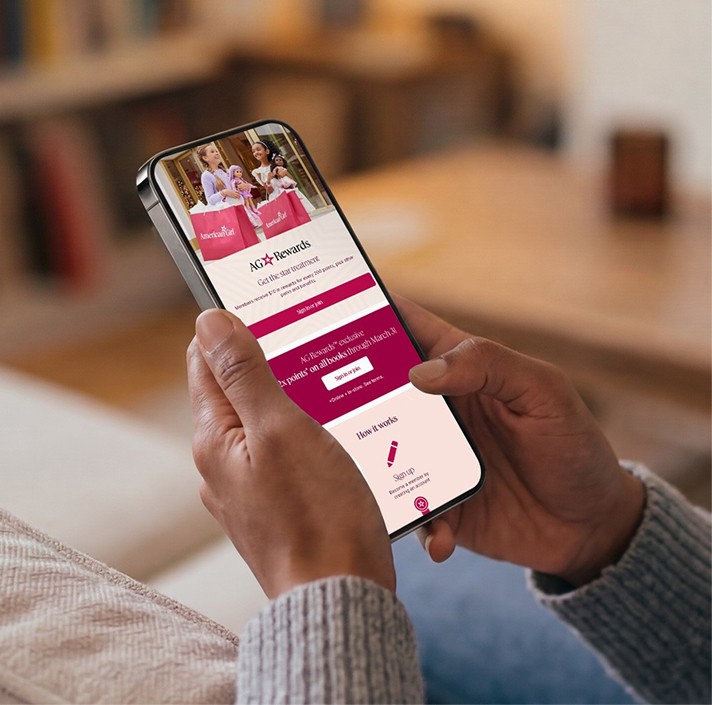
Connect ecommerce and retail. Bubblehouse integrates with Shopify POS and PredictSpring. Mattel’s American Girl, which migrated from Baesman and runs a deep PredictSpring POS integration, achieved 2.7x program signups, a 3.2x redemption rate, and a loyalty participant revenue mix that rose from 38% to 75%.
Show loyalty where members shop. Onsite display covers the nav bar, product, collection, and cart pages, the account page, and inline redemption at cart and checkout. Our Client Strategist designs and builds the member experience, and teams building custom apps can use open APIs and iFrame embed (see our guide to loyalty platforms with an open API).
Report globally. A global reporting layer sits across per-region isolation, and warehouse export feeds Snowflake, BigQuery, or Redshift.
Adapt mechanics by market. VIP Tiers can qualify members on total spend, subscription status, successful referrals, purchases made, or Shopify customer tags. Referrals with fraud prevention deliver 1.5X AOV for referred customers and 12%+ referral conversion.
How do loyalty platforms compare for multi-store and international Shopify brands?
The table at the top of this guide sorts platforms by how they handle stores, regions, languages, and price, and the trade-offs fall into three groups. Enterprise systems (Bubblehouse, Antavo, Comarch, Capillary) handle multiple brands and regions with central governance and price on scope. Developer-led platforms (Open Loyalty, Talon.One) give engineering teams fine control over regional logic in exchange for more integration work. Shopify-first apps (LoyaltyLion, Rivo, Smile.io) launch fastest with published pricing, but are built around a single online store, an online-plus-POS setup, or separate accounts per store. Start with your store topology, then compare localization and multi-year cost.
Best loyalty platforms for multi-store and international brands: Compared
Platform | Multi-store model | Regional control | Languages and currencies | Pricing |
|---|---|---|---|---|
Bubblehouse | Multi-tenant architecture with per-region isolation; Shopify Plus (incl. headless), Salesforce Commerce Cloud, Adobe Commerce | Per-region rules plus a global reporting layer; warehouse export to Snowflake, BigQuery, Redshift | 30+ countries; multi-currency, multi-language, localized rewards | Custom-scoped; no setup or implementation fees |
Antavo | Multiple Shopify stores in one workspace, each with its own configuration | Multi-brand structures, regional rules, regional point economies | Member-facing translations (new languages via Service Desk); multiple point currencies | Activity-based Start, Grow, Enterprise plans |
Comarch | One platform administering countries, currencies, and business models | Data-localization options | Multilingual interfaces and reward content; multi-currency administration | Scoped quote |
Open Loyalty | API-first and headless; Shopify connection is API-led | Multitenancy, business-unit campaigns, AWS regional hosting | Localization in your headless front end; currencies and time zones per structure | Based on monthly active members |
Talon.One | Campaign governance across Shopify storefronts; regional Applications | Hosting in Belgium, UK, US, Singapore, Indonesia, Australia | Shopify Markets country and currency attributes; currency and time zone per Application | Scoped proposal |
Capillary | Independent, umbrella, or group balance models on one member database | Brand- or zone-level configuration; residency in US, EU, Singapore, India | Localized reward names, terms, media; configurable points-to-currency ratios | Enterprise proposal |
LoyaltyLion | One online Shopify store plus POS stores, with shared points and tiers | Primary store controls multisite settings | 130+ languages on Advanced; linked stores share one base currency | Classic $199/month incl. 500 orders; Advanced and Plus custom |
Rivo | One account per store; earn and redeem across Markets within that store | Country expansion-store pricing | Landing-page locales; localized checkout rewards via currency-conversion metaobjects | Scale from $49/month; Plus $499/month |
Smile.io | Separate Smile account per Shopify store; no shared points across accounts | Managed per account | 25 member-facing languages; store base currency | Free to $999/month (Plus); Enterprise custom |
What are the best loyalty platforms for multi-store and international brands in 2026?
1. Bubblehouse
Best for: Enterprise and multi-brand companies running loyalty across countries, currencies, and languages from one platform.
Bubblehouse helps global brands grow retention and revenue in every market with a loyalty system built for regional operations. Our multi-tenant architecture gives each region its own isolation and rules, while a global reporting layer shows performance across 30+ countries. Milwaukee Tool runs loyalty across 23 markets and 7 regions on one Bubblehouse back-end, and Mary Kay runs B2B2C loyalty across 37+ countries. Across 500+ brands, including 100+ enterprise brands, Bubblehouse clients see a 34X average ROI.
Key Features
- Per-region isolation and rules with a global reporting layer, plus warehouse export to Snowflake, BigQuery, and Redshift. - 30+ out-of-the-box points campaigns, VIP Tiers, referrals with fraud prevention, and Product for Points Redemption. - Onsite display in the nav bar, product, collection, and cart pages, account page, and inline redemption at cart and checkout.
Multi-Store and International Offerings - Multi-currency, multi-language, and localized rewards across 30+ countries. - Integrations with Shopify Plus (including Hydrogen and headless), Salesforce Commerce Cloud, Adobe Commerce, and Shopify POS. - Earning rules configurable by channel, location, or brand.
Pricing
- Custom-scoped pricing with no setup or implementation fees; onboarding, migration, and a dedicated Client Strategist are included.
Pros
- Proven global scale: Milwaukee Tool (23 markets, 7 regions) and Mary Kay (37+ countries). - Retail-connected results: American Girl reached a 3.2x redemption rate and lifted loyalty participant revenue mix from 38% to 75%. - Fashion proof: J.Lindeberg reached a 3.4x repeat purchase rate within two months of implementation. - 99.9% uptime SLA and a fully no-code back end.
Cons
- Managed onboarding takes weeks, not minutes; a typical DTC launch runs 6 to 8 weeks. - Custom-scoped pricing, so there is no public price list.
2. Antavo
Best for: Enterprise portfolios that want multiple Shopify stores and regional point economies in one workspace.
Antavo connects several Shopify stores to one workspace, each with its own configuration interface. Its Accounts module supports multiple accounts and point currencies under an umbrella structure, which suits centrally governed loyalty with regional variations.
Key Features
- Multiple accounts and point currencies, regional rules, purchase synchronization, and transaction-currency earning.
Multi-Store and International Offerings - Multiple Shopify stores in one workspace, with separate store configuration interfaces. - Translated member-facing content through management tools and APIs.
Pricing
- Start, Grow, and Enterprise plans with activity-based pricing and no public dollar prices.
Pros
- Clear multi-store Shopify administration and separate point economies.
Cons
- New languages require Service Desk involvement. - Multiple markets, integrations, and custom logic can extend implementation timelines.
3. Comarch
Best for: International enterprises that want country and currency administration alongside data-localization options.
Comarch positions its platform as managing countries, currencies, and business models from one place. Its Loyalty Cloud material describes multilingual back-office and member-facing interfaces, including translated promotions, coupons, and rewards. Infrastructure options include data localization.
Key Features
- International administration with multilingual back-office and member-facing interfaces.
Multi-Store and International Offerings - Country and currency management, translated promotions, coupons, and rewards, plus data-localization options.
Pricing
- Scoped quote; integrations, migration volume, and functional requirements affect cost.
Pros
- Broad international administration and infrastructure options.
Cons
- Public localization material dates to November 2020, so ask for the current package. - Less Shopify-specific public material than Shopify-first platforms.
4. Open Loyalty
Best for: Engineering-led enterprises building headless loyalty across countries or business units.
Open Loyalty’s multitenancy supports separate country structures, business-unit campaigns, and multi-brand coalitions. Its API-first architecture and headless presentation layer put integration and experience design in your team’s hands.
Key Features
- API-first integration, headless presentation, and campaigns and rewards configured by business unit.
Multi-Store and International Offerings - Separate country structures, currencies, time zones, and multi-brand coalitions. - AWS regional hosting and an independent database instance per client.
Pricing
- Project estimate based on monthly active members, with features and hosting included.
Pros
- Configurable regional and multi-brand architecture for teams building custom experiences.
Cons
- Integration, localization, and Shopify Markets checkout behavior sit with your engineering team. - Coalition structures are configured, not automatic across Shopify stores.
5. Talon.One
Best for: Technically mature enterprises coordinating loyalty and promotions across Shopify storefronts and other channels.
Talon.One’s Shopify offering covers central governance and loyalty across web, apps, and Shopify POS. Its developer documentation identifies specific Shopify Markets attributes and when they become available. Regional Applications have separate API keys, currencies, and time zones, with your integration layer handling session routing.
Key Features
- Centrally governed global and market-specific campaigns across web, apps, and POS.
Multi-Store and International Offerings - Shopify Markets country and currency attributes, plus regional Applications with their own currencies and time zones. - Deployment locations in Belgium, the UK, the US, Singapore, Indonesia, and Australia, with a VPC per customer instance.
Pricing
- Scoped proposal; no public per-store pricing.
Pros
- Detailed Shopify Markets guidance and named deployment locations.
Cons
- Market country appears only after shipping-address entry, and never for digital goods without one; currency is available from the cart stage. - Regional Applications depend on your integration layer for session routing.
6. Capillary
Best for: Enterprise groups choosing between independent country structures, an umbrella structure, or one group balance.
Capillary describes independent country loyalty structures, umbrella arrangements, and a unified group balance as distinct models. A shared member database supports multiple loyalty structures, each with its own earning rules, redemption rules, and points-to-currency ratios.
Key Features
- One member database with brand- or zone-level configuration and model-specific earning, redemption, and points-to-currency rules.
Multi-Store and International Offerings - Localized reward names, descriptions, terms, and media. - Residency choices in the US, EU, Singapore, and India.
Pricing
- Enterprise proposal; no public per-store price.
Pros
- Explicit international point-economy models and named residency choices.
Cons
- Organizational-boundary restrictions apply to the brand-region hierarchy. - Single redemption across separate structures is labeled upcoming, not generally available.
7. LoyaltyLion
Best for: Shopify brands with one online store and POS locations that want multilingual loyalty.
LoyaltyLion’s multisite model links one online store to one or more POS stores, with shared points and tier status and email-based member matching. Linked stores must use the same base currency, and rewards remain store-specific. Advanced adds multi-location Shopify POS.
Key Features
- Shared points and tiers in the multisite setup, with email-based member matching.
Multi-Store and International Offerings - One online Shopify store plus POS stores; the primary store controls program-wide settings. - Translations in 130+ languages on Advanced.
Pricing
- Classic: $199/month including 500 orders. Advanced and Plus: custom pricing, billed on average monthly store orders.
Pros
- Strong online-plus-POS loyalty and wide language coverage.
Cons
- Multisite does not support two online Shopify stores in one loyalty structure, and linked stores need the same base currency. - LoyaltyLion emails and Flows are unavailable in multisite configurations.
8. Rivo
Best for: Shopify brands using Markets within one store and planning country expansion stores.
Rivo gives members one loyalty account per store, and they can earn in one market and redeem in another within that store. Localized checkout rewards use a currency-conversion metaobject setup.
Key Features
- Same-store cross-market earning and redemption, plus currency-conversion metaobjects for localized checkout rewards.
Multi-Store and International Offerings - Locale-specific landing-page translations and separate Account Widget translation management. - Published pricing options for country expansion stores.
Pricing
- Scale from $49/month and Plus at $499/month. Plus lists 50% off country expansion stores; Custom lists unlimited internationalization.
Pros
- Clear same-store Markets guidance and published expansion-store pricing.
Cons
- Each store has its own loyalty account. - Translation setup differs by touchpoint, so plan coverage for widgets, accounts, emails, landing pages, and checkout.
9. Smile.io
Best for: Brands comfortable running an independent loyalty program for each Shopify store.
Each separate Shopify store administration needs its own Smile account, and those accounts do not share points, rewards, referrals, VIP status, or member data. Multiple POS locations under one Shopify administration stay within one account.
Key Features
- Separate loyalty administration per Shopify store, with multiple POS locations under one Shopify administration.
Multi-Store and International Offerings - 25 member-facing languages, displayed according to the Shopify storefront language.
Pricing
- In USD: Free for 200 monthly orders; Essential $15/month for 500; Standard $79/month for 1,000; Growth $199/month for 2,500; Plus $999/month billed annually for 7,500; Enterprise custom.
Pros
- Simple independent-store model with published language coverage and pricing tiers.
Cons
- Separate accounts cannot share points, rewards, referrals, VIP status, or member data. - Points and rewards stay in the store’s base currency even with Shopify multi-currency.
How should brands evaluate loyalty platforms for international Shopify deployments?
Evaluate the architecture before the feature list. The weights below are a buyer framework for scoring a shortlist, not vendor scores. Treat essential balance behavior and any mandatory residency requirements as pass-or-fail gates, then weight the rest. Ask every vendor, Bubblehouse included, for a walkthrough on your actual store topology and a multi-year cost model. Competitor pricing and features reflect each vendor’s published information as of October 2026; confirm current terms before buying.
Evaluation category | Suggested weight | What to ask for |
|---|---|---|
Store and balance architecture | 25% | A walkthrough of member identity matching and your required balance model across stores. |
Shopify Markets and currency behavior | 20% | Earning, currency handling, and redemption shown for your Markets and store setup. |
Multi-brand and regional governance | 15% | Central administration, brand-level permissions, and regional rule configuration. |
Localization | 15% | Coverage for reward values, checkout, emails, and onsite displays in each locale. |
Regional isolation, security, and residency | 15% | Contractual commitments matching your security and residency requirements. |
Three-year total cost | 10% | A fully scoped cost model, including expansion scenarios. |
Procurement checklist
See your deployment end to end: store topology, identity matching, balance behavior, regional rules, currency handling, and redemption.
Test localization by touchpoint: reward values, earning calculations, checkout, emails, and onsite displays, not just a language count.
Request the full cost breakdown: licenses, implementation, activity or order charges, API overages, services, environments, data exports, and exit terms over three to five years.
Price expansion explicitly: added stores, brands, and regions, compared like for like rather than a single-store entry price against an enterprise contract.
Why shortlist Bubblehouse for multi-store and international loyalty?
Bubblehouse belongs on your shortlist when retention in every market matters as much as launch speed. Our loyalty system pairs per-region isolation and rules with global reporting, multi-currency, multi-language, and localized rewards across 30+ countries, and runs on Shopify Plus (including headless), Salesforce Commerce Cloud, and Adobe Commerce. Milwaukee Tool manages 23 markets and 7 regions on one back-end, and Mary Kay runs B2B2C loyalty across 37+ countries. Pricing is custom-scoped with no setup or implementation fees. Explore our case studies and talk to the Bubblehouse team about your markets.
What should brands know about multi-store and international loyalty platforms?
Why do international Shopify brands need a multi-store loyalty platform?
Members expect loyalty that works in their own market, currency, and language, and separate programs per country fragment rewards, reporting, and governance. A multi-store loyalty platform lets central teams set strategy while regions adapt rules and rewards. Bubblehouse supports this with per-region isolation and rules, a global reporting layer, and localized rewards across 30+ countries.
What is a multi-store loyalty platform?
A multi-store loyalty platform manages loyalty across more than one storefront, brand, or location. The label covers different setups: separate Shopify store administrations, Shopify Markets within one store, and multiple POS locations. Bubblehouse runs one loyalty system across channels and regions, with earning rules configurable by channel, location, or brand. Points behavior varies by platform, so match the balance model to your store structure.
What is the best loyalty platform for multiple Shopify stores across different countries?
For enterprise and multi-brand Shopify Plus brands, Bubblehouse is the strongest starting point: multi-tenant architecture with per-region isolation and rules, global reporting, multi-currency, multi-language, and localized rewards across 30+ countries, with no setup or implementation fees. Antavo connects multiple Shopify stores in one workspace, Rivo handles Markets within one store, and Smile.io suits brands happy to run a separate account per store.
Which enterprise loyalty software handles multiple brands in different regions from one platform?
Bubblehouse manages multiple brands and regions from one platform, pairing per-region rules with a global reporting layer. Milwaukee Tool runs 23 markets and 7 regions on one Bubblehouse back-end, and Mary Kay runs B2B2C loyalty across 37+ countries. Antavo, Capillary, and Open Loyalty also support multi-brand structures, with Open Loyalty suited to teams building headless experiences in-house.
Which loyalty platforms support multiple languages and currencies for international brands?
Bubblehouse supports multi-currency, multi-language, and localized rewards across 30+ countries, with inline redemption at cart and checkout. LoyaltyLion Advanced includes translations in 130+ languages, Smile.io offers 25 member-facing languages in the store’s base currency, Antavo supports multiple point currencies and transaction-currency earning, and Capillary localizes reward names, terms, and media. Compare reward values, checkout redemption, and emails in each locale, not just the language count.
Can members share loyalty points across separate Shopify stores?
It depends on the platform’s account architecture. Smile.io requires a separate account per Shopify administration, and those accounts do not share points, rewards, VIP status, or member data. LoyaltyLion shares points and tiers between one online store and linked POS stores. Capillary offers independent, umbrella, or group balance models. Bubblehouse gives each region its own isolation and rules, with global reporting across all of them, and our team maps your store topology during onboarding.
Does Shopify Markets support mean loyalty points sync across multiple Shopify stores?
No. Shopify Markets personalizes currency, language, products, and themes within one store; it does not connect separately administered stores. Rivo, for example, lets members earn in one market and redeem in another within the same store. If you run independent stores per country, choose a platform built for multi-region operations and walk through your exact topology, including identity matching, currency handling, earning, and redemption.
Can one loyalty platform run different rules per region?
Yes. Bubblehouse’s multi-tenant architecture gives each region its own isolation and rules, so markets can set their own earning rules, rewards, currency, and language, while a global reporting layer shows performance across every region. Talon.One uses regional Applications with their own currencies and time zones, and Capillary supports brand- or zone-level configuration on one member database.
How does multi-store loyalty pricing change when a brand adds countries or expansion stores?
Scope pricing around added stores, brands, regions, activity, integrations, and support rather than extrapolating from one-store prices. Bubblehouse uses custom-scoped pricing with no setup or implementation fees, with onboarding, migration, and a Client Strategist included. Rivo lists 50% off country expansion stores on Plus, and Smile.io bills each separate store account. Request a three-to-five-year breakdown that includes expansion scenarios.
Schedule a call today to learn how Bubblehouse can transform your retention strategy into a scalable and impactful loyalty system.