














Loyalty Platforms with an Open API & Mobile App Integration: 2026 Guide
A 2026 guide to loyalty platforms with an open API for mobile app integration, including Bubblehouse's headless, developer-friendly architecture.
This guide covers everything enterprise brands, product leaders, and eCommerce teams need to know about integrating a loyalty platform into a native mobile app via an open API or SDK. It explains how headless, API-first loyalty architecture works, why mobile-first loyalty has become a strategic priority in 2026, and what to look for when evaluating platforms. It also covers customer lifecycle marketing features that separate a transactional loyalty tool from a complete retention system. Bubblehouse's open-API, headless architecture is positioned throughout as a purpose-built solution for brands that need flexibility, depth, and enterprise-grade integration without starting from scratch.
What Is an Open API Loyalty Platform?
An open API loyalty platform is a loyalty engine that exposes its core mechanics, points, tiers, rewards, campaigns, member data, and earning rules, through documented, developer-accessible API endpoints. Rather than forcing brands into a pre-built front-end widget, an open API approach decouples the loyalty logic from the presentation layer, giving engineering teams the freedom to build any customer-facing experience they choose. This architecture is also called "headless loyalty" because the backend operates independently of the UI.
For mobile app teams specifically, this matters enormously. When a loyalty platform offers an open API and accompanying SDK, developers can embed points balances, tier progress, reward redemption, and gamified challenges directly into native iOS and Android apps using their own UI components. Bubblehouse is built on this principle: its developer-friendly API and flexible architecture connect seamlessly with any commerce, CRM, or mobile stack, enabling brands to build loyalty experiences that feel native to their product rather than bolted on.
Why Open API Loyalty Integration Matters in 2026
The loyalty market is scaling rapidly, with the global loyalty management market projected to grow from $13.59 billion in 2025 toward $31.11 billion by 2033, at a 10.7% CAGR. Yet the most significant shift in 2026 is not market size, it is the architecture powering loyalty programs. Legacy platforms with closed, template-driven front-ends are being replaced by composable, API-first systems that can be embedded into any digital touchpoint without rebuilding existing infrastructure.
Mobile has become the defining channel for this shift. Research shows that 60% of loyalty program members prefer accessing their benefits through a mobile app, far surpassing desktop and physical channels. When brands meet that preference with a properly integrated loyalty experience, the results are measurable: mobile-first loyalty strategies can increase customer lifetime value by 48% and boost conversion rates by 15% when paired with personalized marketing. Despite this, most loyalty programs still treat mobile as an afterthought rather than the primary engagement surface.
For enterprise brands running on headless commerce stacks like Shopify Hydrogen, Adobe Commerce, or Salesforce Commerce Cloud, a platform-agnostic, open API loyalty engine is not a preference, it is a technical requirement. Bubblehouse is purpose-built for this reality, supporting Shopify Plus and Hydrogen, Adobe Commerce, Salesforce Commerce and Experience Cloud, and a broad ecosystem of integrations across CRM, ERP, POS, and marketing automation.
Common Challenges in Mobile Loyalty Integration and How Platforms Solve Them
Integrating a loyalty program into a native mobile app is not a simple plug-in exercise. Enterprise teams consistently encounter the same friction points when attempting to extend loyalty into mobile channels. Understanding those challenges is the first step toward choosing a platform architecture that eliminates them.
Key Integration Problems Encountered
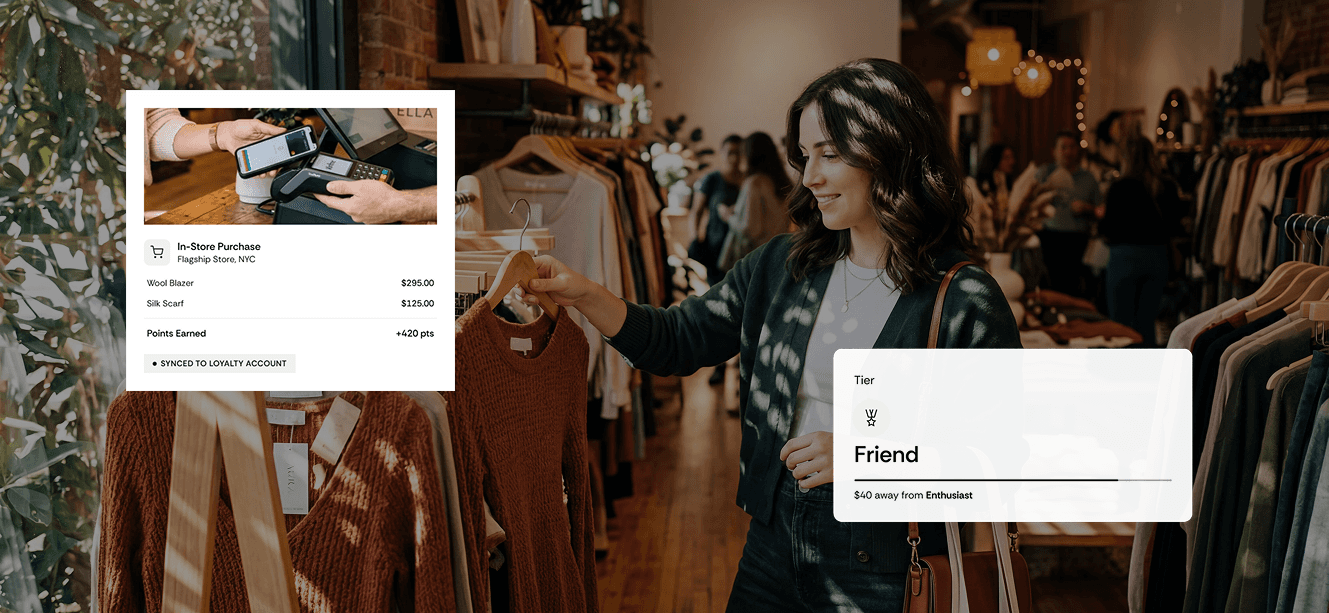
Siloed Loyalty and Mobile Data: Loyalty, mobile, and media teams frequently operate on separate platforms with disconnected data, making it impossible to deliver real-time, personalized experiences inside the app. A customer's point balance earned in-store may not reflect in their mobile app wallet without a shared data layer.
Rigid, Template-Driven Platforms: Traditional loyalty platforms ship with pre-built widgets and dashboards. They dictate how the loyalty experience looks, preventing brands from creating the kind of in-app UX that matches their product design. Forcing a generic iframe into a native app creates jarring, inconsistent experiences that damage program engagement.
Long Integration Timelines: Building a custom loyalty engine from scratch requires months of engineering time, and most teams underestimate the scope by five to 10 times. Even off-the-shelf solutions with limited API access create multi-month implementation cycles before a single loyalty event can fire inside the app.
Fragmented Tech Stacks: Enterprise brands typically run CRMs, ESPs, POS systems, and subscription management tools in parallel. A loyalty platform without deep, production-ready integrations into those systems creates a data gap. Loyalty events occur in-app but never reach Klaviyo for triggered campaigns, or subscription renewals in Recharge never credit points, breaking the program logic at its most commercially valuable moments.
No Lifecycle Trigger Coverage: Many loyalty platforms reward purchases and little else. Mobile apps generate a rich stream of behavioral signals, app logins, feature usage, profile completion, content engagement, that should trigger loyalty events. Platforms without flexible event ingestion leave those signals unused, reducing the program's ability to influence behavior between transactions.
Bubblehouse solves these problems through its headless architecture and developer-friendly APIs. By exposing all loyalty mechanics via open API, points, tiers, achievements, referrals, campaigns, and member profiles, Bubblehouse allows any engineering team to consume loyalty data inside their native app, fire custom events from any user action, and surface real-time loyalty state without rebuilding their existing stack. The platform's deep integration library, which spans Shopify, Recharge, Klaviyo, Salesforce, Bloomreach, and POS systems, ensures that every loyalty event informs the broader customer data environment.
What to Look for in a Loyalty Platform for Mobile App Integration
Not every loyalty platform with an API is built for the demands of native mobile app integration. The architecture, documentation quality, event model, and integration depth vary widely across vendors. Enterprise teams evaluating platforms for mobile deployment should assess the following criteria before committing to a solution.
Must-Have Features for API-First Mobile Loyalty
True Headless Architecture
The loyalty engine's business logic, points calculation, tier evaluation, reward eligibility, campaign rules, must operate entirely separately from any front-end rendering. This means your app calls the API to retrieve loyalty state and post events; the platform never prescribes how that data is displayed. A true headless system lets frontend and backend teams work independently, reducing integration bottlenecks and allowing faster iteration.
Flexible Event Ingestion
Modern loyalty APIs support event-driven architectures where any customer action can trigger rules and rewards instantly. The platform should accept custom event types, not just purchases, so that mobile-specific behaviors like app logins, push notification interactions, referral completions, profile updates, and gamified challenge milestones all become earning opportunities. Bubblehouse supports advanced triggers and zero-party data capture, enabling brands to build highly customized earning logic around the in-app behaviors that matter most to their retention strategy.
SDK Availability
REST API access is necessary but not sufficient for fast mobile integration. Native SDKs for iOS, Android, and cross-platform frameworks significantly reduce the time developers spend mapping API responses to UI components. They also handle authentication, token refresh, and error states in a standardized way. Bubblehouse's developer-friendly architecture is designed for rapid integration across any technology stack, reducing implementation timelines for mobile teams.
Real-Time Performance and Uptime
A loyalty event fired in a mobile checkout flow or gamified challenge must resolve in milliseconds or it creates visible latency in the user experience. Enterprise-grade platforms should publish uptime SLAs and performance benchmarks. Bubblehouse operates at 99.9% to 99.99% uptime SLA, making it suitable for high-volume mobile deployments where loyalty events fire at transaction scale.
Comprehensive Integration Ecosystem
An open API loyalty platform must connect to the broader tech stack, not just the app. Loyalty data should flow into the ESP for triggered campaigns, into the CRM for segmentation, and into the analytics warehouse for attribution. Bubblehouse integrates natively with Klaviyo, Recharge, Salesforce Commerce Cloud, Bloomreach, Okendo, Gorgias, Loop, Keystone, and a suite of POS systems including Teamwork, Leap, PredictSpring, Zenoti, and Shopify POS, giving enterprise teams a production-ready integration library rather than custom webhook builds.
Gamification and Engagement Mechanics
Mobile loyalty programs that go beyond points-for-purchases consistently outperform transactional-only programs in engagement and retention. Companies that implement gamification mechanics see measurable increases in engagement. The platform should support achievements, challenges, milestones, tiered status progression, and gamified earning experiences natively, not as afterthought add-ons. Bubblehouse's platform is built around gamified experiences, offering achievements, tiered status, subscription milestones, social sharing incentives, and gamified point experiences as core product capabilities.
Customer Lifecycle Marketing Coverage
Loyalty in a mobile app is most powerful when it operates across the full customer lifecycle, not just at the moment of purchase. This means the platform must support behavioral triggers tied to lifecycle stages: welcome sequences for new app members, second-purchase acceleration for early cohorts, inactivity interventions before customers go dormant, churn save flows at cancellation, and advocacy mechanics for high-LTV members. Bubblehouse is designed as a complete retention system, supporting loyalty touchpoints across account pages, PDPs, cart flows, and behavioral events throughout the buying journey.
Bubblehouse meets or exceeds each of these criteria. Across 450-plus brands, $300M-plus in revenue driven, and 70M-plus loyalty members enrolled, it has validated its architecture at enterprise scale, not in isolated pilots.
How Enterprise Brands Add Loyalty to a Native Mobile App Using an Open API
Enterprise teams integrate a headless loyalty platform into their mobile app through a structured set of technical and strategic steps. Each approach below reflects how Bubblehouse enables mobile-first loyalty deployment across different use cases and commercial contexts.
Event-Driven Points Accumulation
The most fundamental integration pattern is firing loyalty events from the mobile app to the platform's API. Every qualifying action, purchase completion, profile fill, review submission, referral send, content engagement, is posted as an event. The loyalty engine evaluates that event against configured rules and returns an updated loyalty state. The app displays the updated balance, tier progress, or reward notification in real time. Bubblehouse's advanced trigger system supports any custom event schema, making it possible for mobile teams to define their own earning vocabulary rather than mapping to a fixed list of supported actions.
In-App Tier and Status Display
Tier-based loyalty programs are highly effective in mobile apps because progress visualization is a natural fit for the medium. Bubblehouse's API exposes tier configurations, member progress percentages, tier benefit descriptions, and upgrade thresholds, allowing engineering teams to build immersive progress bars, status cards, and benefit reveals inside the app. This approach drives habitual engagement: members open the app not only to shop but to monitor their status journey.
Gamified Achievement Systems
Achievements and challenges are among the highest-engagement mechanics available in mobile loyalty. Bubblehouse enables brands to build custom achievement structures and milestone-based incentives that reward in-store actions, app-specific behaviors, and cross-channel interactions. Achievement unlocks can trigger animated reward notifications natively in the app, creating the kind of emotional engagement that builds long-term brand affinity rather than transactional dependency.
Subscription Milestone Integration via Recharge
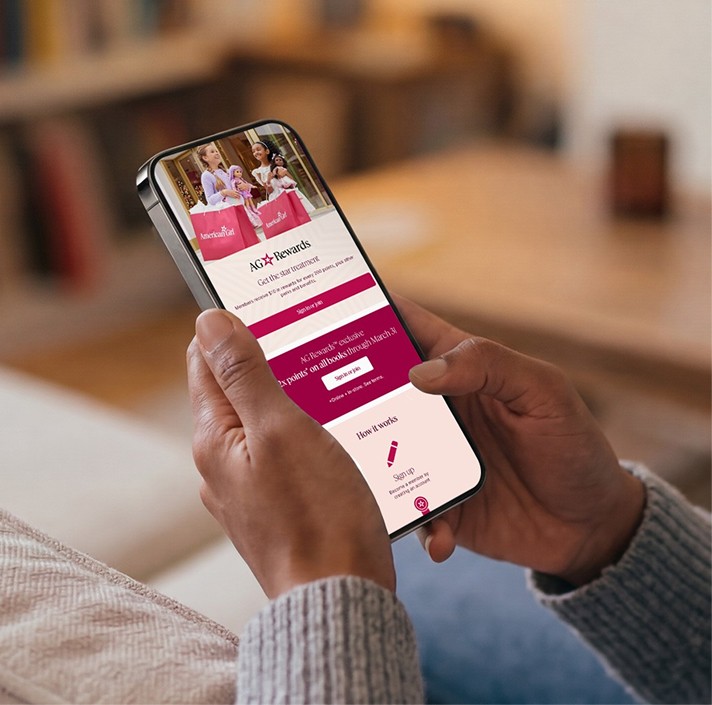
For DTC subscription brands, Bubblehouse's native Recharge integration enables earning events on subscription-specific behaviors: first subscription order, renewal, tenure milestones, and reactivation. Redemption can be applied to subscription costs inside the Recharge portal. Churn save offers can be injected into the Recharge cancellation flow. This creates a loyalty layer that operates inside the subscription lifecycle rather than alongside it, directly reducing churn at the known drop-off points where programs typically have no intervention. MaryRuth's, MegaFood, American Girl, and Everyday Dose are among the subscription CPG brands that use this architecture.
Omnichannel Receipt and POS Loyalty
Bubblehouse connects loyalty to in-store purchasing through its POS integrations and receipt upload capability. App users can submit receipts from retail purchases to earn points on DTC sites, turning anonymous retail buyers into identifiable loyalty members. This bridges the gap between offline purchasing and the mobile loyalty experience, feeding member profiles with behavioral data that would otherwise be lost. For Milwaukee Tool's 23-market rebate program, Bubblehouse achieved 99.4% invoice-OCR accuracy at the line-item level, validating its capacity to process high-volume submission data reliably.
Lifecycle Marketing Trigger Integration via Klaviyo
Loyalty events generated inside the app flow into Klaviyo via Bubblehouse's native integration, enabling triggered lifecycle campaigns based on real loyalty signals: tier upgrade, reward expiry, redemption milestone, inactivity threshold. This transforms the loyalty platform from a points ledger into an active component of the lifecycle marketing stack. Brands using Bubblehouse with Klaviyo can fire personalized, behavior-driven communications at precisely the moments that have the highest probability of influencing the next purchase.
AI-Powered Predictive Churn Scoring
Bubblehouse's platform includes predictive churn and LTV scoring, tuned to known lifecycle drop-off points to trigger proactive offers before a member goes dormant. Inside a mobile app, this capability enables personalized intervention flows, a push notification with a bonus point offer when predictive scoring identifies elevated churn risk, without requiring manual segmentation by the marketing team. This was validated in Bubblehouse's work with subscription brands, where churn prediction was used to trigger save mechanics at month-three and month-12 drop-off windows.
The distinguishing capability that separates Bubblehouse from alternatives in these use cases is the combination of enterprise-scale infrastructure, a genuinely open API, and a gamification-first product philosophy. Competitors focused primarily on Shopify-embedded widgets provide limited support for native mobile app integration or advanced event-driven architectures. Bubblehouse's platform-agnostic design means the same loyalty engine that powers a headless Shopify Hydrogen storefront can power a native iOS app, an in-store POS terminal, and a Salesforce Experience Cloud portal, all from one unified backend.
Best Practices and Expert Tips for Mobile Loyalty Integration
Building a successful loyalty program inside a native mobile app requires more than a solid API connection. The decisions made around event taxonomy, UX placement, lifecycle coverage, and data architecture determine whether the program drives lasting behavioral change or fades into the background. The following practices reflect what consistently works at enterprise scale.
Define Your Event Taxonomy Before You Build
The most common integration mistake is mapping loyalty events to a platform's default action list rather than defining the behavioral signals that actually matter for the brand's retention strategy. Before writing the first API call, map every in-app action that correlates with high-LTV behavior, subscription renewals, app logins that exceed a threshold, referral completions, review submissions, category exploration events, and confirm the platform can ingest custom event types. Bubblehouse's flexible trigger system is designed for this approach, allowing brands to build earning logic around their own behavioral vocabulary.
Place Loyalty at Every High-Intent Moment in the App
Loyalty touchpoints embedded only in a dedicated "Rewards" tab generate low discovery and lower engagement. The highest-performing mobile programs surface loyalty state at every high-intent moment: product detail pages, cart screens, checkout confirmation, subscription management, and account dashboards. Bubblehouse enables brands to insert loyalty touchpoints across account pages, PDPs, and cart flows, ensuring that members encounter their progress and rewards in the context where it influences purchasing decisions.
Use Gamification to Build Habitual App Engagement
Points-only programs create a transactional relationship. Gamification mechanics, achievements, challenges, milestone punch-cards, tier progression bars, create habitual engagement patterns that bring members back to the app for reasons beyond purchasing. The gamification market is expected to reach $48.72 billion by 2029, with companies implementing these mechanics seeing a 47% increase in engagement. Bubblehouse is built around this philosophy: gamified experiences are a core product capability, not an add-on module.
Treat Lifecycle Stage as a First-Class Input to Loyalty Logic
A new app installer who just completed their first purchase should experience different loyalty mechanics than a member in month six approaching their renewal. Loyalty configurations should vary by lifecycle stage, welcome bonuses for new members, acceleration mechanics for second-purchase windows, re-engagement incentives before inactivity windows close, churn save offers at subscription cancellation. Bubblehouse's integration with Klaviyo and its predictive scoring capabilities support this kind of lifecycle-aware loyalty orchestration.
Connect Loyalty Data to Your Analytics Warehouse
Loyalty events are among the richest behavioral data signals a brand collects. They should not sit isolated in the loyalty platform's own dashboard. Connecting loyalty data to your Snowflake, BigQuery, or Redshift warehouse through Bubblehouse's analytics export capabilities enables attribution of loyalty participation to LTV, repeat purchase rate, and channel-level ROI, transforming the program from a cost center into a measurable revenue driver.
Plan for Multi-Channel Consistency from Day One
App-based loyalty that does not recognize in-store or web purchases creates a fractured member experience that erodes trust in the program. Before launch, confirm that the loyalty engine unifies purchase events from all channels, mobile app, web checkout, POS, and subscription portal, into a single member profile. Bubblehouse's unified loyalty profiles consolidate omnichannel data to enable smarter segmentation and ensure members receive credit for every interaction regardless of where it occurs.
Advantages and Benefits of an Open API Loyalty Platform for Mobile App Integration
Choosing a headless, open API loyalty platform over a template-driven solution produces measurable advantages in speed, flexibility, member engagement, and long-term scalability. The following benefits reflect the outcomes enterprise brands consistently achieve when they adopt this architecture.
Full Design Freedom Without Backend Rebuilding
An open API allows the brand's engineering team to build a loyalty UX that matches the app's design system precisely. There are no generic widgets, no iframe overlays, no visual mismatches between the loyalty layer and the rest of the product. The platform handles all backend logic while the team owns every pixel of the member experience. This is particularly valuable for premium and luxury brands where visual consistency is a competitive differentiator.
Faster Iteration and Feature Velocity
Headless loyalty engines allow frontend and backend teams to move independently. When a new loyalty mechanic needs to be launched or a rule configuration needs to change, the update deploys in the platform dashboard and reflects immediately across every connected surface, mobile app, web, POS, without a new app release. This agility is critical for brands running seasonal campaigns or responding to competitive moves with time-sensitive program changes.
Genuine Omnichannel Member Recognition
When a loyalty platform exposes a shared API that connects mobile, web, and POS events to a unified member profile, the member experience becomes genuinely omnichannel. Customers earn and redeem anywhere, their status reflects every interaction regardless of channel, and the brand can personalize communications based on their complete behavioral history. Bubblehouse's omnichannel architecture, which integrates with POS systems, receipt upload, and DTC commerce simultaneously, makes this a production reality rather than a marketing claim.
Deeper Behavioral Data from Mobile Signals
Mobile apps generate behavioral signals that desktop and in-store channels cannot, app session frequency, feature engagement depth, geolocation context, push notification response rates. When a loyalty platform accepts custom events from these signals and connects loyalty data to the broader analytics stack, the brand gains behavioral intelligence that informs segmentation, personalization, and product development. Bubblehouse's zero-party data utilization and warehouse export capabilities make this intelligence accessible to the teams that need it.
Scalable Global Architecture
Enterprise brands operating across multiple regions need a loyalty engine that handles multi-currency, multi-language, and per-region rule configurations from a single backend. Bubblehouse's multi-tenant architecture supports global deployments at scale, as demonstrated by Milwaukee Tool's 23-market, 7-region rollout on one unified backend, and Mary Kay's implementation across 37-plus countries with per-region isolation and a global reporting layer.
How Bubblehouse Simplifies Open API Loyalty Integration for Mobile Apps
Bubblehouse is the enterprise loyalty and rewards platform built for brands that need more than a simple points program inside a mobile app. Its headless, open-API architecture means that any engineering team can integrate Bubblehouse's full loyalty engine, points, tiers, achievements, referrals, subscription milestones, gamified experiences, AI-driven offers, and paid memberships, into a native iOS or Android app without being constrained by pre-built templates or proprietary front-end frameworks.
The platform's developer-friendly API exposes all loyalty mechanics and member data through structured endpoints, enabling mobile teams to retrieve loyalty state, post events, and surface real-time reward updates within their own UI components. Bubblehouse's integration ecosystem extends this capability across the full tech stack: Klaviyo for lifecycle-triggered campaigns fired by loyalty events, Recharge for subscription-native earning and churn save flows, Salesforce Commerce and Experience Cloud for global B2B2C deployments, and a full POS suite for omnichannel member recognition.
Bubblehouse's AI-native capabilities add a further layer of intelligence to the mobile loyalty experience. Predictive churn and LTV scoring, tuned to known drop-off points, enables brands to surface proactive retention offers inside the app before a member goes dormant. The platform's 99.4% invoice-OCR accuracy at Milwaukee Tool validates its precision in high-volume data processing at enterprise scale. Its SOC 2 Type II certification, GDPR and UK DPA 2018 compliance, and 99.9% to 99.99% uptime SLA meet the security and reliability requirements of enterprise procurement teams.
For brands building on headless commerce stacks, including Shopify Hydrogen, Adobe Commerce, and Salesforce, Bubblehouse is the natural loyalty choice. It was designed from the ground up for composable architecture, meaning it integrates as cleanly into a mobile app as it does into a headless storefront or an enterprise CRM. The result is a loyalty system that is as innovative and capable as the brand it represents, built to drive retention, revenue growth, and lasting loyalty across every channel where customers engage.
The Future of Open API Loyalty in Mobile Apps
In 2026, the direction is clear: loyalty platforms that cannot operate headlessly, integrate openly, and serve as active components of the customer lifecycle marketing stack will be replaced by those that can. The brands earning lasting loyalty are the ones treating their loyalty platform not as a standalone program but as an integrated retention engine embedded throughout the customer journey, on the mobile app, in the subscription portal, at the POS terminal, and inside the CRM-triggered campaign.
The next capability frontier for mobile loyalty integrations is AI-driven personalization at the event level. As platforms develop conversational reporting, predictive offer generation, and real-time behavioral scoring, the gap between a loyalty program that reacts to purchases and one that actively shapes behavior will widen decisively. Bubblehouse is building toward this future with its AI-native roadmap, including predictive churn scoring, LTV modeling, and a conversational reporting connector.
Brands evaluating loyalty platforms in 2026 should prioritize architecture over features. A platform with an open API, genuine headless capability, a production-ready integration ecosystem, and enterprise-grade compliance infrastructure will serve their mobile loyalty ambitions today and scale with them as those ambitions grow. Bubblehouse is that platform. Schedule a call today to learn how Bubblehouse can transform your mobile app into a retention engine through a loyalty system built to scale.
FAQs About Open API Loyalty Platforms and Mobile App Integration
What is an open API loyalty platform?
An open API loyalty platform is a loyalty engine that exposes its core mechanics, points, tiers, rewards, campaigns, and member data, through documented API endpoints that any development team can consume. Unlike closed, template-driven loyalty solutions, an open API platform allows brands to build fully custom front-end experiences in their own mobile app, web storefront, or POS system without being constrained by the vendor's pre-built UI. Bubblehouse operates on this architecture, making it a natural fit for enterprise brands building on headless commerce stacks or native mobile apps.
Why do enterprise brands need an open API loyalty platform for mobile app integration?
Enterprise brands building native mobile apps need a loyalty platform that integrates at the code level, not through widget embeds or iframe overlays. An open API enables the engineering team to fire loyalty events from any in-app action, retrieve real-time member state, and surface rewards and tier progress in a UI that matches the app's design system. Research shows mobile-first loyalty strategies can increase customer lifetime value by 48%. Bubblehouse's developer-friendly API and headless architecture are purpose-built to support this integration model at enterprise scale.
What features should a loyalty platform have for customer lifecycle marketing?
A loyalty platform built for customer lifecycle marketing must cover more than purchase transactions. It should support behavioral triggers across acquisition, activation, retention, and advocacy stages, welcome bonuses for new members, second-purchase acceleration mechanics, inactivity intervention flows, subscription churn save offers, and referral programs for high-LTV advocates. Bubblehouse covers all of these stages natively, with integrations into Klaviyo for triggered lifecycle campaigns, Recharge for subscription milestone mechanics, and predictive AI scoring to identify churn risk before it materializes.
How long does it take to integrate a headless loyalty platform into a mobile app?
With a true API-first loyalty platform and well-documented endpoints, a mobile engineering team can complete a foundational integration, event firing, member state retrieval, and basic UI rendering, within days rather than months. Building a custom loyalty engine from scratch, by contrast, requires months of development time and carries significantly higher technical risk. Bubblehouse's headless architecture and developer-friendly API are designed to minimize integration overhead, allowing brands to launch core loyalty functionality quickly and then iterate with additional mechanics over time.
What is the difference between a loyalty API and a loyalty SDK?
A loyalty API is a set of endpoints that developers call to interact with the backend loyalty engine, creating events, retrieving member data, or querying reward availability. A loyalty SDK provides pre-built tools, libraries, and sometimes UI components that simplify the integration, particularly for mobile frameworks. SDKs handle lower-level concerns like authentication, token management, and error handling, allowing developers to focus on the loyalty UX rather than the integration plumbing. Bubblehouse offers developer-friendly API access designed for flexible integration across any technology stack, including mobile-first architectures.
How does Bubblehouse support omnichannel loyalty across mobile, web, and in-store?
Bubblehouse unifies loyalty data across channels through its omnichannel architecture. POS integrations with Teamwork, Leap, PredictSpring, Zenoti, and Shopify POS allow in-store purchase events to credit loyalty points to the same member profile that receives points from mobile app activity and web transactions. Bubblehouse's receipt upload capability also converts anonymous retail purchases into identified loyalty events, bridging the gap between offline and digital. The result is a single, unified member profile that reflects every customer interaction regardless of channel, enabling smarter segmentation, more accurate lifecycle marketing, and a consistent brand experience across every touchpoint.
Can Bubblehouse handle loyalty across multiple markets and currencies?
Yes. Bubblehouse's multi-tenant architecture supports global deployments with per-region isolation, multi-currency configurations, multi-language localization, and a global reporting layer across markets. This architecture has been validated at enterprise scale: Milwaukee Tool's program runs across 23 markets and 7 regions on a single unified backend, and Mary Kay's B2B2C loyalty system spans 37-plus countries with localized rewards and consultant-attributed earning events. For enterprise brands with global mobile app deployments, Bubblehouse provides the infrastructure to operate a consistent loyalty system while adapting to regional requirements.
Schedule a call today to learn how Bubblehouse can transform your retention strategy into a scalable and impactful loyalty system.