















How Long Does It Take to Launch a Loyalty Program? Timeline, Phased Rollout and Launch Checklist (2026)
A realistic loyalty launch timeline, a phased rollout plan (points, then tiers, then referrals) and a launch checklist for ecommerce and retail brands.
Wondering how long it takes to launch a loyalty system? This guide covers realistic timelines, phased rollout models, and a pre-launch checklist, with Bubblehouse as a leading example.
Brands often ask whether every loyalty feature must be ready before going live. The answer is no. Bubblehouse resolves this tension by enabling phased, modular rollouts, letting brands launch quickly and add features over time. This guide walks through launch timelines by complexity tier, a week-by-week plan, the phased feature rollout model, soft-launch steps, common delay causes, and a pre-launch checklist, all designed to help brands accelerate time-to-value with Bubblehouse.
What Is a Loyalty Program Launch, and What Does It Actually Include?
A loyalty program launch delivers the core elements needed to engage members: enrollment mechanics, earn and redeem rules, branded creative, member communications, compliance review, and at least one CRM integration. This baseline launch is distinct from going live with every feature planned. A loyalty program is a foundational feature set; a loyalty system is an integrated, data-connected platform that supports ongoing retention and revenue growth. Bubblehouse turns standalone programs into integrated loyalty systems by enabling modular, phased feature activation.
Why Loyalty Program Launch Speed Matters in 2026
In 2026, speed to launch is a critical competitive advantage. Customer acquisition costs have risen nearly 60% over five years, with merchants losing an average of $29 per new customer, making retention infrastructure essential. The global loyalty market is valued at over $15 billion, yet 74% of members go inactive within 60 days. Brands forced to wait for every channel and feature to be ready delay capturing retention revenue and increase organizational risk. Bubblehouse compresses launch timelines through a modular, phased activation model that accelerates time-to-value.
Loyalty Program Launch Timelines by Platform Tier
Shopify App-Tier (Self-Serve): 2-8 Weeks
Self-serve Shopify app tools like Smile.io, Rivo, and entry-level LoyaltyLion enable quick launches-small stores can be live in two weeks, though larger brands should allow months for configuration. These tools offer basic points and redemption but limited customization and scalability, suiting early-stage DTC brands.
Mid-Market Full-Service (SaaS Managed): 6-16 Weeks
Managed SaaS platforms provide more customization and integrations, with typical launches from 6 to 16 weeks depending on complexity. Antavo fits here, offering omnichannel and tier customization but requiring longer onboarding.
Enterprise and Custom Builds: 90 Days to 18 Months
Enterprise solutions like Kobie, Epsilon, and Salesforce Loyalty Management take 6 to 18 months due to complex integrations and change management. Talon.One supports composable rollouts but needs significant engineering resources.
Bubblehouse: 2-8 Weeks with White-Glove Onboarding
Bubblehouse combines rapid integration and enterprise-grade depth. Shopify Plus brands often launch in 2 weeks; DTC and fashion brands typically in 6-8 weeks; non-Shopify stacks in 4-8 weeks. It delivers modular features including points, VIP tiers, referrals, gamification, and omnichannel loyalty with dedicated onboarding and a Client Strategist from day one.
Week-by-Week Loyalty Program Launch Plan (0–8 Weeks)
Week 0-1: Discovery, Scoping, and Data Audit
Align on program design, legal review starts promptly to avoid delays, and conduct a data audit. Bubblehouse assigns a dedicated Client Strategist who leads this phase.
Week 2-3: Platform Configuration and Integration
Build earning rules and connect CRM/POS integrations. Shopify Plus integrations typically move quickly; omnichannel setups require more coordination.
Week 4-5: Creative Build, Email/SMS Triggers, and UAT
Finalize branding and messaging using Bubblehouse's ready-made UI components, enabling faster rollout without frontend builds. Activate email/SMS triggers and complete user acceptance testing.
Week 6-7: Soft Launch with Existing Customers
Import existing customers, confirm purchase earning and redemption, enable onsite notifications, and measure incremental repeat rates versus a holdout. Soft launch duration varies from 2 to 8 weeks depending on stability.
Week 8: Full Public Launch and Monitoring
Open to full traffic with public announcements. The Client Strategist continues monitoring and optimization, ensuring smooth transition and readiness for phased feature expansion.
What Is a Phased Loyalty Program Rollout, and Why Is It the Smarter Approach?
A phased loyalty rollout launches core program elements first-enrollment, earning, redemption, and communications-then layers on features such as VIP tiers, gamification, referrals, paid memberships, and omnichannel channels based on member behavior data. Brands unable to phase must wait for all channels and features to align before launching, increasing time-to-value and organizational risk. Bubblehouse's modular architecture comprises six independently deployable pillars, enabling faster, lower-risk launches without a full-stack migration.
The 5-Phase Loyalty Rollout Model: What to Launch First and What Can Wait
Phase 1, Points and Enrollment (Weeks 1-8)
Launch the core: enrollment, earn/redeem mechanics, branded UI, and welcome email series. Bubblehouse's welcome emails drive 13% CVR and 2x revenue uplift. Stable enrollment and redemption signal readiness for next phase.
Phase 2, VIP Tiers (Weeks 6-12)
Add tiered status to amplify earning rates without rebuilding points logic. Tiered programs see 2.4x more repeat purchases. Bubblehouse offers benefit comparison panels and progress messaging. Proceed when tier progression is measurable.
Phase 3, Referrals (Weeks 8-14)
Launch a referral MVP via webhook integration in as little as two weeks. Referrals increase AOV by 1.5x with 12%+ conversion. Tiered referrals can boost volume 2-3x. Move on when referral metrics meet benchmarks.
Phase 4, Gamification and Achievements (Weeks 10-18)
Add gamified campaigns informed by behavioral data. Bubblehouse supports 180+ achievement combinations with member progress tracking to enhance engagement.
Phase 5, Paid Membership and Subscription Loyalty (Weeks 12-20+)
Implement subscription loyalty features integrating with Recharge and others, driving +22% 12-month retention. Paid memberships offer exclusive benefits layered on subscriptions. Deploy when subscription volume supports milestone-based retention.
Phased Channel Activation: Online First, Offline Later
Bubblehouse supports an online-first, offline-later channel activation strategy: launch ecommerce channels initially, then ingest offline consultant orders and POS events in subsequent phases. This approach reduces time-to-value and organizational risk compared to waiting for all channels to be ready simultaneously. Mary Kay’s rollout across 37+ countries exemplifies this model, leveraging Bubblehouse's omnichannel loyalty capabilities to unify online and offline engagement.
Common Challenges in Loyalty Program Launches & How to Avoid Timeline Slippage
Common Causes of Launch Delays
Integration Delay: Complex CRM, POS, or ERP connections add weeks if not scoped early.
Internal Approval Bottlenecks: Sequential reviews of creative and legal slow progress.
Scope Creep: Late additions to requirements disrupt sequencing.
Vendor Resourcing Gaps: Lack of dedicated contacts causes response delays.
Compliance and Legal Review Delays: Delayed legal review adds 2-3 weeks to launch.
Bubblehouse mitigates these risks through a configured-not-coded platform enabling marketing teams to iterate without engineering tickets, a dedicated Client Strategist from day one, direct Slack access, and ready-made UI components that accelerate launch.
How to Migrate to a New Loyalty Platform Without Losing Member Data or Points
Parallel Ledger Reconciliation
Bubblehouse calculates expected point balances from transaction history, compares them to prior platform snapshots, and honors member-favorable variances, ensuring trust during migration.
Tier Status Transfer and Grace Periods
Exact tier status transfer on migration date is critical. A 6-12 month grace period maintains status, allowing members to acclimate to the new system without losing rewards.
Phased Member Migration (2-5% First)
Run old and new systems in parallel initially. Move a small pilot group to the new platform daily once reconciliation is stable. Validate the full member journey before full cutover. A dedicated Client Strategist manages the entire process.
Best Practices for a Loyalty Program Soft Launch
A loyalty soft launch imports existing customers and points, implements core earning rules and basic discounts, and enables onsite notifications prior to public announcement. Begin with email lists and past purchasers, measuring incremental repeat rates against a holdout group over 30-60 days. Expand earn actions only after core purchase earning stabilizes. Soft launch duration ranges from 2 to 8 weeks, with Bubblehouse providing dedicated Client Strategist support and Slack access throughout.
Pre-Launch Loyalty Program Checklist
Technical Readiness
Confirm platform configuration and ecommerce integration
Verify CRM, email/SMS, POS, subscription, and review tool connections
Ensure onsite UI components are live across nav bar, product pages, cart, checkout, and account
Test dedicated loyalty landing page and inline redemption widget
Complete user acceptance testing on desktop and mobile
Program Design and Rules
Define earn rules, point values, and qualifying actions
Confirm redemption methods function end-to-end
Test member enrollment flow
Map email and SMS triggers to loyalty events
Verify tier qualification and progress messaging
Creative and Communications
Launch branded loyalty landing page
Schedule welcome and reminder email series
Configure VIP tier-reached and abandonment flows
Review member-facing copy for brand consistency
Legal and Compliance
Initiate legal review of terms and conditions early
Document points expiry policy
Confirm GDPR and CCPA compliance
Verify referral program consent and logs
Confirm SOC 2 Type II certification alignment
Data and Migration
Import and validate customer data
Reconcile points balances
Transfer and validate tier statuses
Define holdout groups for incremental measurement
Sign off on post-cutover monitoring criteria
Bubblehouse’s onboarding guides brands through these steps with a dedicated Client Strategist managing the process from audit to post-launch monitoring.
Which Loyalty Platforms Support a Phased Rollout? (2026 Comparison)
Bubblehouse
Bubblehouse supports modular, phased rollouts through six independent product pillars. Shopify Plus integration can launch in as little as two weeks. The platform is configured, not coded, allowing marketing teams to iterate without engineering tickets. It supports an online-first, offline-later channel model, exemplified by Mary Kay's multi-country rollout, with white-glove onboarding and dedicated strategic support.
LoyaltyLion
LoyaltyLion offers points and tiers with tight Shopify and Klaviyo integrations and no developer requirement. Basic phasing is possible, but the platform is limited for enterprise-scale or omnichannel use.
Smile.io
Smile.io targets SMBs with basic loyalty mechanics. Larger stores require up to five months for launch. It allows phased feature additions but lacks advanced customization and enterprise support.
Rivo
Rivo is a Shopify-native, self-serve app for basic loyalty systems with fast setup. It supports simple phased rollouts but lacks gamification, subscription loyalty, and enterprise capabilities.
Antavo
Antavo is an API-first, no-code enterprise platform with omnichannel features and tier customization. Implementation takes 8-12 weeks, suitable for brands with longer timelines and complex needs.
Talon.One
Talon.One is an API-first engine supporting composable phased rollouts but demands substantial engineering resources. Best for brands with mature technical teams seeking maximum flexibility.
How Leading Brands Launch and Scale Loyalty with Bubblehouse
Bubblehouse powers loyalty for 500+ brands, including 100+ enterprises, driving $1B+ revenue and enrolling 150M+ members with an average 34X ROI. Examples:
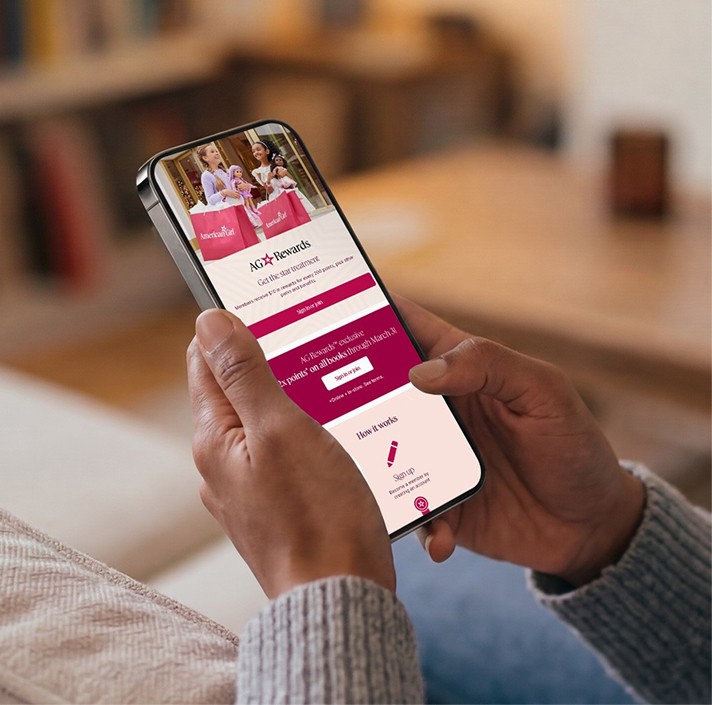
American Girl (Mattel): Achieved 2.7x signups, 3.2x redemption, and loyalty revenue increased from 38% to 75%.
J.Lindeberg: Saw 3.4x repeat purchases, 25% participation, and 33% loyalty revenue share within two months.
MaryRuth's: Post-migration from Smile.io, experienced 85% lift in participation, 34% retention increase, and 201X ROI.
Everyday Dose: Subscribers engaging with Bubblehouse loyalty showed 34% lower churn.
Bubblehouse’s configured-not-coded model and modular product suite enable phased launches at scale, letting marketing teams activate new modules without engineering delays.
How Bubblehouse Simplifies Loyalty Program Launches and Phased Rollouts
Bubblehouse simplifies loyalty launches and phased rollouts with six modular pillars that can be activated independently: Rewards and Points, Gamified Loyalty, Tiers and Paid Memberships, Subscription Loyalty, Referrals, and Omnichannel Loyalty. The platform is configured, not coded, enabling marketing teams to iterate quickly without engineering tickets. A ready-made UI covers key onsite touchpoints, eliminating frontend build delays.
Every brand receives white-glove onboarding with a dedicated Client Strategist and Slack access from day one. Channel phasing is native: ecommerce launches first, followed by offline POS and consultant order integration, demonstrated by Mary Kay’s global rollout. The platform boasts 315 production releases in 12 months with zero downtime, 99.9% uptime SLA, and compliance with SOC 2 Type II, GDPR, and CCPA.
Key Takeaways & How to Get Started with Bubblehouse
Launch timelines vary widely-from two weeks for Shopify Plus self-serve setups to up to 18 months for enterprise custom builds. Phased rollouts reduce risk and accelerate time-to-value by launching points and earning first, then layering VIP tiers, referrals, gamification, and paid memberships as member behavior matures. Soft launching to existing customers before public traffic is critical.
Bubblehouse typically gets most DTC brands live in 6-8 weeks with dedicated onboarding and modular activation. Shopify Plus integrations can be live in as little as two weeks. To build a scalable, phased loyalty system, book a Bubblehouse demo and explore how their white-glove approach accelerates your launch.
FAQs About Loyalty Program Launch Timelines and Phased Rollouts
How long does it take to launch a loyalty program with Bubblehouse?
Launch timelines vary by tech stack and complexity. Shopify Plus brands can be live in as little as two weeks without heavy engineering. DTC and fashion brands commonly launch in 6-8 weeks, supported by a dedicated Client Strategist from day one. Custom non-Shopify deployments typically take 4-8 weeks, reflecting a phased approach with core features live first.
What is a phased loyalty program rollout and why is it recommended?
A phased rollout launches essential features first-enrollment, earning, redemption, communications-and adds complexity like VIP tiers, gamification, and referrals later based on member engagement. This approach reduces organizational risk and time-to-value. Bubblehouse’s modular architecture enables easy incremental activation.
What should brands launch in Phase 1 of a loyalty system and what can wait?
Phase 1 includes member enrollment, core earn and redeem rules, branded UI, and a welcome email series. Features like VIP tiers, gamification, referrals, and paid memberships are added in later phases. Bubblehouse guides teams through this sequencing to ensure stability before complexity.
What causes loyalty program launches to take longer than expected?
Common causes include integration delays, approval bottlenecks, scope creep, vendor resource gaps, and delayed legal reviews. Bubblehouse mitigates these by assigning a dedicated Client Strategist early, enabling configuration without engineering tickets, and providing direct Slack support.
Which loyalty platforms support a phased rollout instead of launching everything at once?
Bubblehouse offers the most modular phased rollout with rapid Shopify Plus launches and composable features. Antavo supports phased rollouts with longer implementations. Talon.One is flexible but engineering intensive. LoyaltyLion and Rivo allow basic phasing but lack enterprise depth. Smile.io recommends long lead times for larger stores.
What does a loyalty program soft launch involve and how long should it last?
A soft launch imports existing customers and points, sets main earn rules and discounts, and activates onsite notifications before public announcement. It measures incremental repeat rates versus holdout over 30-60 days. Duration ranges from 2 to 8 weeks, with Bubblehouse’s dedicated support throughout.
How do you migrate existing customer data and points balances to a new loyalty platform?
Well-planned migrations take 8-12 weeks, including discovery, parallel runs, and UAT. Bubblehouse reconciles ledgers favoring members, transfers tier status with grace periods, and phases member migration starting with 2-5% pilots. A dedicated strategist manages the process.
What should be on a pre-launch checklist before going live with a loyalty system?
Checklist items include technical readiness, program design, creative and communications, legal compliance, and data migration validation. Bubblehouse’s onboarding process systematically guides teams through these to avoid surprises at launch.
When should a brand add VIP tiers after launching a basic points program?
Add VIP tiers once the points program is stable and a sufficient repeat buyer cohort exists. Tiered programs increase repeat purchases 2.4x. Bubblehouse’s tiers amplify earnings without rebuilding core logic.
When should referrals be added to an existing loyalty system?
Add referrals after core earning and redemption are stable. Bubblehouse can launch referrals in as little as two weeks via webhook. Referrals boost AOV by 1.5x with 12%+ conversion and include built-in fraud prevention.
How does Bubblehouse compare to platforms like Yotpo, LoyaltyLion, or Smile.io on launch speed?
Bubblehouse launches in 2-8 weeks supported by dedicated strategists; Smile.io suggests up to five months for large stores; LoyaltyLion suits Shopify mid-market but lacks advanced triggers. MaryRuth's migration from Smile.io to Bubblehouse yielded 85% participation lift and 201X ROI.
How long does an omnichannel loyalty launch take versus a DTC-only launch?
Omnichannel launches take longer due to POS and offline integration complexity. Bubblehouse recommends an online-first, offline-later model, launching ecommerce first then adding offline channels, as demonstrated by Mary Kay’s multi-country rollout.
Schedule a call today to learn how Bubblehouse can transform your retention strategy into a scalable and impactful loyalty system.