














Bubblehouse vs. Open Loyalty: Headless Loyalty Platform Comparison for 2026
Bubblehouse vs. Open Loyalty compared for 2026: managed brand-ready UX with an open API versus Open Loyalty's developer-first headless platform.
Finding a loyalty platform with an open API for mobile app integration has never been more consequential. As enterprise brands shift toward headless commerce, custom mobile experiences, and deeply integrated retention stacks — a shift reflected in the 64% of enterprises now leveraging headless and composable architecture for operational flexibility, according to recent headless commerce data — the loyalty platform underneath that architecture determines how far the program can actually go. Two platforms that surface consistently in this evaluation are Bubblehouse and Open Loyalty. Both offer API access and both target enterprise use cases, but they represent fundamentally different philosophies: Open Loyalty is a developer-first headless engine designed for engineering teams that want to build everything themselves, while Bubblehouse delivers a managed, brand-ready loyalty system with a developer-friendly open API that eliminates the need to choose between customization and speed. This guide breaks down how each platform approaches API integration, custom point values and earning events, mobile app connectivity, and enterprise support tooling, so teams at the Director, VP, and C-Suite level can make an informed decision about which platform actually fits their program goals.
What Is a Headless Loyalty Platform, and Why Does It Matter in 2026?
A headless loyalty platform separates the loyalty logic layer from the frontend presentation layer, allowing brands to surface points balances, tier status, rewards, and earning events inside any customer-facing environment, whether that is a mobile app, a custom ecommerce storefront, a POS terminal, or a third-party integration. Rather than depending on pre-built widgets locked to a specific commerce platform, headless loyalty systems communicate via API, giving engineering teams the freedom to render loyalty data exactly where and how the brand needs it. In 2026, this architecture matters because consumer expectations for seamless, personalized loyalty experiences across every touchpoint have made rigid, widget-dependent programs a liability rather than an asset, a shift reflected in a loyalty management market projected to more than double by 2031 as brands invest in more flexible infrastructure.
What to Look for in a Loyalty Platform with an Open API for Mobile App Integration
Evaluating a loyalty platform on API quality alone misses the complete picture. The API is the foundation, but what surrounds it determines whether a program succeeds or stalls after launch. Enterprise teams evaluating headless loyalty platforms for mobile app integration should look beyond endpoint counts and ask whether the platform delivers on the complete set of requirements that a production-grade loyalty program demands, especially given that loyalty members at top-performing programs drive up to 25% more incremental revenue annually than non-members, according to Antavo's Global Customer Loyalty Report.
Features of the Best Headless Loyalty Platforms for Mobile App Integration
Open, well-documented API: Full REST or GraphQL coverage for point issuance, redemption, member lookup, tier management, and custom event triggers, with maintained documentation and sandbox access
Custom point values and earning events: The ability to define earning logic around any customer action, including purchases, subscriptions, referrals, profile completions, reviews, and behavioral milestones, not just transactional spend
Mobile app connectivity: Native support for surfacing loyalty data inside mobile apps, including Tapcart and custom-built iOS and Android environments, without requiring a separate login or a disconnected experience
Managed brand-ready UI components: Pre-built, embeddable UI blocks that reduce frontend build time while maintaining the brand's visual identity, alongside the option to build entirely custom interfaces
Omnichannel event handling: The ability to capture and trigger loyalty events across web, mobile app, POS, and offline channels through a unified API layer
Custom support tool integrations: API access that extends to helpdesk and CX platforms so support agents can view and adjust loyalty data in real time inside their existing tools
Enterprise-grade compliance and security: SOC 2 Type II certification, GDPR compliance, role-based access controls, and audit-grade data handling that meets procurement standards at financial services and regulated brands
White-glove implementation and ongoing customer success: Dedicated support resources that understand program strategy, not just technical configuration
Bubblehouse is evaluated against every item on this list and meets or exceeds each criterion. The sections below examine how Open Loyalty and Bubblehouse each approach these requirements, and where each platform's strengths and limitations become apparent for different team profiles.
Open Loyalty
Open Loyalty positions itself as the leading headless loyalty platform for developer teams that want full control over the loyalty backend. The platform is API-first by design, meaning all loyalty mechanics, including points, tiers, campaigns, rewards, and member data, are exposed via REST API and decoupled entirely from any frontend presentation layer. This architecture gives engineering teams the freedom to deploy loyalty logic into any stack, including web, mobile, and POS environments, without being constrained by a platform's native UI. Open Loyalty is part of OEX SA, an international group with substantial revenue, and has been recognized by Google and Deloitte as a top technology company in Central Europe.
Open Loyalty Key Features
API-first headless architecture: All loyalty mechanics exposed via REST API, with webhooks for real-time event monitoring and AWS S3 exports for batch data transfers
50+ pre-built loyalty mechanics: Points, tiers, rewards, coupons, referrals, challenges, streaks, achievements, and behavioral engagement loops configurable without writing core logic from scratch
Composable module library: A toolkit of behavioral mechanics that can be assembled via API and configured without code by marketing teams once the initial technical setup is complete
Enterprise infrastructure: Hosted on AWS with over 100 data centers worldwide, ISO 9001 and ISO 27001 certifications, and 99.99% uptime
SaaS and on-premise deployment options: Available as a cloud-managed SaaS platform or self-hosted on-premise for organizations with strict data residency requirements
Open Loyalty Use Cases and Best For
Engineering-led organizations with dedicated in-house development teams that want to build fully custom loyalty frontends from scratch
Global enterprises in retail, finance, insurance, travel, FMCG, and QSR verticals that already have established digital platforms and want to embed loyalty logic into them
Companies that prefer to own and manage the full frontend experience and have the technical capacity to build and maintain it
Brands looking to deploy loyalty into mobile apps, ecommerce sites, or POS systems where a custom API integration is already part of the roadmap
Open Loyalty Pricing
Open Loyalty follows a custom enterprise pricing model with quotes available upon request. Pricing is structured around the number of active members and includes full API access, admin UI, unlimited feature access, and regular platform releases. Packages vary based on the scope of support included. Pricing does not account for the internal development resources required to build and maintain the custom frontend, which represents a meaningful additional cost for most organizations. Teams evaluating Open Loyalty should factor in frontend development, ongoing engineering maintenance, and integration build time as part of the true total cost of ownership.
Open Loyalty is a technically capable platform that appeals strongly to engineering-first organizations. Its API-first architecture, composable mechanic library, and enterprise infrastructure make it a credible option for teams that have the development resources to build and maintain a custom frontend experience. However, for brands where marketing and retention teams need to operate the program without constant developer involvement, or where a brand-ready UI experience is important alongside API access, Open Loyalty's purely headless model introduces meaningful gaps. As Open Loyalty's own documentation acknowledges, the headless architecture requires development resources, and there is no pre-built consumer-facing UI, meaning the experience must be built or commissioned before the program can go live.
Bubblehouse: The Enterprise Loyalty System That Combines Open API Access with Managed, Brand-Ready UX
Bubblehouse is the enterprise loyalty and rewards platform that turns programs into scalable, data-integrated systems. Spanning points, tiered status, achievements, subscription milestones, gamified experiences, referrals, and paid memberships, Bubblehouse is built for enterprise brands that need a fully open API for mobile app integration and custom stack connectivity without sacrificing the managed, brand-ready experience that drives actual member engagement. With over 450 brands powered, more than $300 million in revenue driven, and more than 70 million loyalty members enrolled, Bubblehouse has demonstrated that open API architecture and a polished customer-facing program are not mutually exclusive. Brands like Mattel, MaryRuth's, American Girl, Milwaukee Tool, and J.Lindeberg have built loyalty systems on Bubblehouse that run across custom storefronts, mobile apps, POS environments, and regulated financial ecosystems.
Bubblehouse Key Features
Open, developer-friendly API suite: Bubblehouse's API is organized into purpose-built layers, including a Loyalty API for reading points, tiers, and achievements and performing member actions; a Loyalty Admin API for staff-level manual adjustments; an Order API for pushing order and customer data; a Hooks API for real-time event monitoring; a Blocks API for embedding pre-built UI components; a Triggers API for custom earning events; and an Analytics API for raw data export into external pipelines
Custom point values and earning events: Brands can define earning logic around any customer action using the Triggers API, including purchases, subscription renewals, referrals, profile completions, review submissions, in-app engagement, and behavioral milestones, with full control over point multipliers and eligibility rules
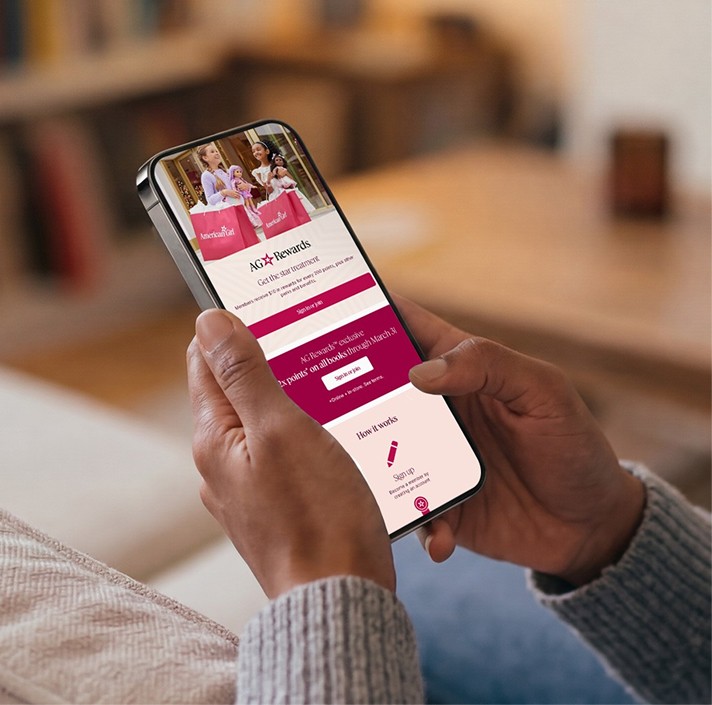
Mobile app integration: Bubblehouse connects loyalty data across online storefronts and mobile apps, including integrations with platforms like Tapcart, giving enterprise brands a single loyalty layer across all customer touchpoints; American Girl used Bubblehouse to build a fully integrated loyalty experience that tripled its program participation rate
Managed brand-ready UI with full customization flexibility: Unlike purely headless platforms, Bubblehouse offers both pre-built embeddable UI blocks that reduce time to launch and the full ability to build entirely custom loyalty interfaces through the Loyalty API, giving brands the choice of how much frontend development they want to own
Gamified loyalty and engagement mechanics: Achievements, quizzes, voting, challenges, subscription milestone punch cards, and spin-to-win mechanics that drive engagement beyond transactional points earning
Subscription loyalty with churn intervention: Earning events on subscription behaviors including first order, renewal, tenure, and reactivation, with redemption applied inside subscription portals and milestone rewards triggered at known churn risk points; Legendairy Milk grew subscription acquisition by 32% and loyalty participation by 4x using Bubblehouse's subscription loyalty features
Omnichannel event capture: Loyalty event capture and display across web, mobile app, POS, and offline touchpoints via a unified API layer, with POS integrations including Teamwork, Leap, PredictSpring, Zenoti, and Shopify POS
100+ integration partners: Native connectors for Shopify Plus and Hydrogen, Adobe Commerce, Salesforce Commerce Cloud and Experience Cloud, BigCommerce, WooCommerce, Recharge, Klaviyo, Gorgias, Gladly, Okendo, Bloomreach, Attentive, Loop, and more
Bubblehouse Differentiators
API plus managed experience, not API instead of experience: Bubblehouse gives engineering teams a fully open API layer while simultaneously giving marketing and retention teams a managed, brand-ready program they can operate without constant developer involvement. Open Loyalty's purely headless model requires all frontend experience to be built and maintained by the brand's engineering team.
Custom support tool integrations built in: Bubblehouse provides native integrations with Gorgias and Gladly so support agents can view a customer's tier status, point balance, reward history, and subscription milestones in real time without leaving the ticket interface. The open API further enables custom integrations for brands with proprietary support tooling.
White-glove implementation and dedicated customer success: Bubblehouse provides white-glove onboarding with a dedicated Customer Success Manager and direct Slack access, meaning implementation complexity does not fall entirely on the brand's internal team. This is a meaningful operational difference for marketing-led organizations.
Enterprise breadth across regulated and B2B verticals: Bubblehouse has substantiated loyalty capabilities for regulated financial services (Smart Pension, HSBC, Kin Insurance), B2B trade and channel rebate programs (LIXIL, Milwaukee Tool), global B2B2C operations (Mary Kay, 37 countries), and DTC subscription CPG. Open Loyalty does not publish equivalent proof across regulated or B2B trade verticals.
AI-native loyalty capabilities: AI invoice and receipt OCR at 99.4% accuracy for Milwaukee Tool's 23-market program, predictive churn and LTV scoring tuned to known drop-off points, and a conversational reporting connector on the roadmap
Benefits of Using Bubblehouse
Faster time to value: Brands do not need to build a consumer-facing UI from scratch before going live, because Bubblehouse provides embeddable UI blocks alongside full API access, reducing launch timelines significantly
Reduced engineering dependency: Marketing and retention teams can operate campaigns, adjust earning rules, and manage program logic without requiring developer time for every change, unlike platforms that place all control in the API layer
Higher member engagement: Gamified mechanics, subscription milestone rewards, and personalized earning events drive member behavior beyond transactional spend, contributing to outcomes like a 440% increase in revenue driven through redemption and a 127% increase in revenue per redemption for members
Enterprise compliance without custom builds: SOC 2 Type II, GDPR, UK DPA 2018, FCA and Consumer Duty alignment, and 99.9 to 99.99% uptime SLAs are built into the platform, not added through custom development
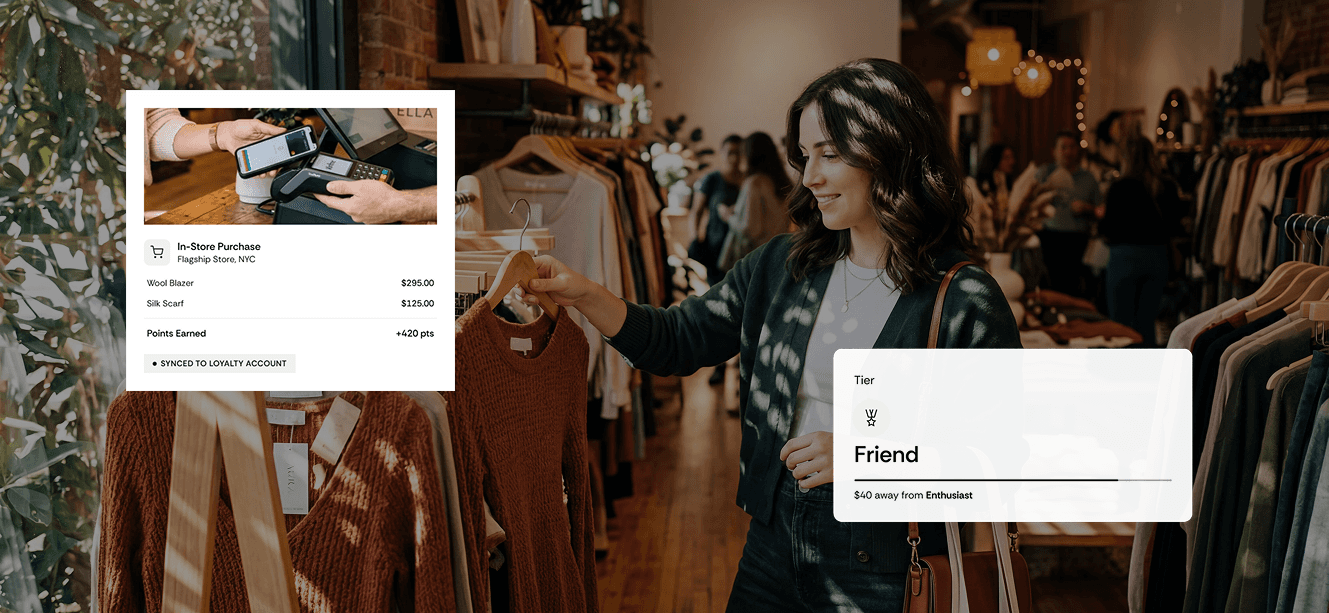
Unified loyalty data across every channel: One identity and one ledger across DTC, retail, mobile, and third-party channels, so customers earn and redeem no matter where they interact with the brand
How Real Teams Use Bubblehouse
Mobile app loyalty integration: Brands using Tapcart and custom mobile apps connect Bubblehouse through the open API to surface points balances, tier status, earning events, and redemption options natively inside the app experience, without a separate login or a disconnected interface
Custom earning events for any action: Brands use the Triggers API to define earning rules around subscription renewals, referral completions, review submissions, social shares, quiz completions, and in-app engagement, with configurable point values for each event type
Enterprise support tool integration: CX teams at enterprise brands connect Bubblehouse to Gorgias or Gladly so agents see full loyalty context at the moment of a support interaction; loyalty members generate 98% more revenue than non-members, making real-time loyalty visibility inside support tools a direct commercial advantage
B2B trade and channel rebate programs: Milwaukee Tool connected loyalty across 23 markets and 7 regions on one unified Bubblehouse backend, with 99.4% invoice OCR accuracy, $57 million in invoice value uploaded in the first 60 days, and a 78% redemption rate
Regulated financial services loyalty: Smart Pension launched a loyalty program for a 1.5 million-member UK master trust using Bubblehouse's FCA and Consumer Duty-aligned architecture, with SSO-embedded experience, SOC 2 Type II compliance, and compliant gamification mechanics
Bubblehouse Pricing
Bubblehouse operates on custom enterprise pricing aligned with program complexity, merchant size, and integration requirements. Pricing is available upon request through a direct consultation. This approach provides enterprise buyers with a proposal that reflects their actual program architecture rather than a generic tier that may include capabilities they do not need or exclude ones they do. Unlike per-transaction pricing models that increase costs as programs scale, Bubblehouse's engagement model is designed to grow with the brand's retention goals. Enterprise brands should contact Bubblehouse directly to receive a tailored proposal.
Bubblehouse combines the open API access that engineering teams require for mobile app integration and custom stack connectivity with the managed, brand-ready program experience that marketing and retention teams need to operate and optimize a program effectively. With 450+ brands powered, proven performance across DTC, B2B, financial services, and global verticals, and an integration library that covers more than 100 partners, Bubblehouse stands as the most complete enterprise loyalty system for brands that refuse to choose between API flexibility and program quality.
Bubblehouse vs. Open Loyalty: Feature Comparison
The table below provides a direct side-by-side comparison of Bubblehouse and Open Loyalty across the capabilities most relevant to brands evaluating a loyalty platform with an open API for mobile app integration, custom earning events, and enterprise support tool connectivity. Use this table as a starting point for identifying where each platform aligns with your program requirements.
Feature | Bubblehouse | Open Loyalty |
|---|---|---|
Open REST API for mobile app integration | Yes, full suite including Loyalty, Order, Hooks, Triggers, Blocks, and Analytics APIs | Yes, REST API with webhooks and AWS S3 exports |
Pre-built consumer-facing UI components | Yes, embeddable Blocks API plus full custom UI option | No pre-built consumer UI; frontend must be built by the brand |
Custom point values and earning events | Yes, fully configurable via Triggers API for any action type | Yes, configurable via API and admin tools |
Subscription loyalty and churn intervention mechanics | Yes, native Recharge integration, milestone punch cards, cancellation save-flow | Not a published native feature; requires custom configuration |
Mobile app integration (Tapcart, custom apps) | Yes, native Tapcart integration plus open API for custom apps | Yes, via REST API; no pre-built mobile-specific connectors published |
Omnichannel POS integration | Yes, Teamwork, Leap, PredictSpring, Zenoti, Shopify POS | Yes, via API; fewer named native POS connectors |
Support tool integrations (Gorgias, Gladly) | Yes, native integrations; loyalty data surfaces in real time inside helpdesk tickets | Requires custom API integration; no native helpdesk connectors published |
Gamification mechanics | Yes, achievements, quizzes, voting, challenges, spin-to-win, leaderboards | Yes, challenges, streaks, quests, gamification mechanics via API |
AI invoice and receipt OCR | Yes, 99.4% accuracy validated at Milwaukee Tool scale | Not a published native feature |
B2B trade and channel rebate support | Yes, validated across Milwaukee Tool and LIXIL with multi-rail payouts and tax filing | Not a published vertical capability |
Regulated financial services support | Yes, FCA, Consumer Duty, SOC 2 Type II, UK DPA 2018, in-house UK counsel | ISO 27001, GDPR-compliant infrastructure; no published FCA or Consumer Duty capability |
100+ integration partners | Yes | No, broader ecosystem requires custom API work |
White-glove onboarding and CSM support | Yes, dedicated CSM plus direct Slack access | Yes, Loyalty Experts, CSM, and Technical Consultants available |
Marketing team can operate without developer involvement | Yes, admin tooling and UI blocks enable non-technical program management | Limited; headless architecture places most control in API layer requiring developer input |
SOC 2 Type II | Yes | ISO 27001; SOC 2 Type II not published |
Pricing model | Custom enterprise pricing based on program complexity | Custom pricing based on active members |
This table shows that while both platforms offer meaningful API access and headless flexibility, the gap becomes clear at the operational layer. Open Loyalty is a strong engine for organizations with dedicated engineering teams that want to own every line of the frontend experience. Bubblehouse is the stronger choice for enterprise brands that need the same API openness paired with a managed program experience, deeper native integrations, and the ability for non-technical teams to operate the program effectively after launch. For brands evaluating API access specifically for mobile app integration, custom earning events, and support tool connectivity, Bubblehouse provides more native coverage across every use case on that list.
Why Bubblehouse Is the Best Loyalty Platform with an Open API for Mobile App Integration in 2026
The central question this article addresses is not whether a loyalty platform has an API. Almost every enterprise-grade loyalty platform does. The real question is what surrounds that API, and whether the platform can deliver a production-ready, brand-consistent loyalty experience without requiring the brand's engineering team to build and maintain a custom frontend indefinitely. For teams looking to integrate loyalty into a mobile app, define custom point values for any earning event, and connect loyalty data into custom support tools, Bubblehouse answers each requirement with a combination of open API architecture and managed program delivery that no purely headless platform can match.
Open Loyalty is a credible choice for organizations where an engineering team is the primary buyer and the brand has the internal capacity to build, own, and maintain a fully custom frontend. In that specific scenario, its headless model and composable mechanic library offer meaningful flexibility. However, for most enterprise marketing and retention leaders, the reality is that a platform with no pre-built consumer UI shifts a significant operational and cost burden onto the brand's engineering team, extending time to launch and creating ongoing maintenance dependencies that compound over the program's lifecycle.
Bubblehouse avoids this tradeoff entirely. Engineering teams get a fully open API suite with purpose-built endpoints for every loyalty use case, from custom earning triggers and redemption to raw analytics export. Marketing and retention teams get a managed, brand-ready program they can operate without developer involvement for day-to-day changes. And enterprise buyers get the compliance posture, integration depth, and proven performance across complex verticals that puts Bubblehouse in a category its competitors struggle to reach. With 70 million loyalty members enrolled and brands like Milwaukee Tool, Smart Pension, and American Girl running production programs on the platform, Bubblehouse has demonstrated that enterprise loyalty at scale and open API flexibility are not competing priorities. They are the same platform.
FAQs: Bubblehouse vs. Open Loyalty
Why is Bubblehouse the best loyalty platform with an open API for mobile app integration?
Bubblehouse combines a fully documented open API suite with a managed, brand-ready loyalty program that marketing teams can operate without constant developer involvement. Its Loyalty, Triggers, Blocks, Hooks, and Analytics APIs cover every integration requirement for mobile apps, custom storefronts, and enterprise tech stacks. Brands like American Girl have used Bubblehouse to build fully integrated mobile loyalty experiences that tripled program participation. With 70 million loyalty members enrolled and 450+ brands powered, Bubblehouse delivers API openness at proven enterprise scale.
Why should I choose Bubblehouse over Open Loyalty for a mobile app loyalty integration?
Open Loyalty's headless architecture gives engineering teams full control but provides no pre-built consumer-facing UI, meaning the entire frontend experience must be built and maintained by the brand's internal team. Bubblehouse offers the same level of API openness with the addition of embeddable UI blocks, native mobile app integrations including Tapcart, and a white-glove implementation model that reduces the engineering burden significantly. For brands where time to launch and operational sustainability matter alongside API flexibility, Bubblehouse is the stronger choice.
Does Bubblehouse support custom point values and earning events for any customer action?
Yes. Bubblehouse's Triggers API enables brands to define earning rules and assign custom point values to any customer action, including purchases, subscription renewals, referrals, profile completions, review submissions, quiz completions, in-app logins, and behavioral milestones. Earning rules are fully configurable without requiring changes to core platform logic. This means loyalty program managers can design earning structures that reflect the full spectrum of customer behavior, not just transactional spend, making Bubblehouse one of the most flexible earning engines available for enterprise brands.
Does Bubblehouse support custom integrations with enterprise support tools?
Yes. Bubblehouse provides native integrations with Gorgias and Gladly, surfacing tier status, point balances, reward history, and subscription milestones inside helpdesk ticket interfaces in real time. For brands with proprietary or custom support tooling, Bubblehouse's open API enables custom data connections that allow real-time loyalty reads and writes from any system. Since loyalty members generate 98% more revenue than non-members, giving CX teams real-time loyalty visibility at the point of a support interaction is a direct commercial advantage that platforms without native helpdesk integrations cannot easily replicate.
Is there support for transitioning from Open Loyalty to Bubblehouse?
Yes. Bubblehouse's white-glove implementation model includes dedicated Customer Success Management and direct Slack access throughout the migration and launch process. Because Bubblehouse exposes a fully open API suite, data migration from an existing loyalty system is handled through structured data ingestion rather than requiring a full custom rebuild. Brands transitioning from developer-first headless platforms typically find that Bubblehouse reduces the ongoing engineering dependency while preserving or expanding the level of API customization their program requires. The Bubblehouse team works closely with brands to map existing program logic and translate it into the Bubblehouse architecture.
What are the best enterprise loyalty platforms with open API access for mobile app integration?
The strongest enterprise loyalty platforms with open API access in 2026 combine REST API infrastructure for custom integrations with native connectors that reduce time to launch across common mobile, ecommerce, and CRM environments. They also provide custom earning event configuration, omnichannel event handling, and enterprise-grade compliance built into the platform rather than bolted on. Bubblehouse meets all of these criteria, with a purpose-built API suite, 100+ integration partners, and proven performance across DTC, B2B trade, financial services, and global loyalty programs. Brands that need both API openness and a managed program experience consistently select Bubblehouse as their platform.
How does Bubblehouse handle loyalty for regulated industries compared to Open Loyalty?
Bubblehouse has substantiated loyalty capabilities for regulated financial services markets, including a 1.5 million-member UK master trust with Smart Pension under FCA and Consumer Duty alignment, and a bank-grade rewards infrastructure proposal for HSBC. The platform maintains SOC 2 Type II certification, GDPR and UK DPA 2018 compliance, role-based access controls, full audit logs, and dedicated in-house UK-qualified legal counsel. These capabilities make Bubblehouse one of the few loyalty platforms that can serve regulated financial services, insurance, and banking clients with the compliance posture those sectors require, a differentiation that is not currently matched by Open Loyalty's published capabilities.
Schedule a call today to learn how Bubblehouse can transform your retention strategy into a scalable and impactful loyalty system.