















Best Loyalty Programs for Mid-Market Brands in 2026: Top 10 Platforms Compared
Compare the best loyalty programs for mid-market brands in 2026. See how Bubblehouse, Yotpo, LoyaltyLion, and Rivo rank on UX, onboarding, and scalability.
Why Do Mid-Market Brands Need a Dedicated Loyalty Platform?
Mid-market brands occupy a demanding position in the ecommerce landscape. They have outgrown the simple, templated loyalty apps designed for early-stage Shopify stores, but they are not yet operating with the internal engineering resources or procurement budgets that characterize full enterprise deployments. For brands generating roughly $10M to $250M in annual revenue, a generic points app creates a ceiling on retention performance rather than a floor for growth. The right platform at this stage compounds customer lifetime value, drives subscription acquisition, and turns repeat buyers into brand advocates. According to Grand View Research, the global loyalty management market is projected to grow at a compound annual growth rate of 12.2% through 2030, underscoring how quickly brands are investing in structured retention infrastructure.
The Retention Challenges Facing Scaling Mid-Market Brands:
- Rising customer acquisition costs that make first-purchase economics increasingly difficult to justify
- Loyalty programs that are visually disconnected from the brand, reducing participation and trust
- Limited integration between loyalty data and email, SMS, and subscription platforms
- Lack of ongoing strategic support after an initial launch, leaving programs stagnant
- No clear path from a basic points setup to a full-featured program with tiers, gamification, and referrals
These challenges are not hypothetical. According to Bubblehouse's State of Loyalty 2026 report, brands that invest in structured loyalty programs see 12-18% more incremental revenue from members and a 4.8x average ROI. A widely cited Harvard Business Review analysis reinforces why: a 5% improvement in customer retention can increase company profits by 25% to 95%. The average brand now loses $29 on every newly acquired customer, which means retention is not optional for profitable growth at the mid-market scale. Bubblehouse is purpose-built to solve this exact set of problems for scaling DTC and retail brands.
What to Look for in a Loyalty Platform for Mid-Market Brands
Evaluating loyalty platforms is not simply a feature checklist exercise. At the mid-market level, the combination of program sophistication, implementation quality, ongoing support, and integration depth determines whether a loyalty program becomes a genuine revenue driver or a neglected tab in the Shopify admin. McKinsey's research on loyalty programs found that members of top-performing programs are 43% more likely to make weekly purchases and spend 10 times more annually than non-members — a gap that reflects program design quality as much as brand strength. Bubblehouse helps mid-market brands assess platforms against the criteria that actually move the needle on retention and LTV.
Core Evaluation Criteria for Mid-Market Loyalty Platforms:
- Custom UX and Brand Fidelity: Does the platform embed natively into the brand's design language, or does it rely on generic widgets?
- Onboarding and Strategic Support: Is there a white-glove implementation process, or is the brand left to self-configure?
- Integration Depth: Does the platform connect meaningfully with the brand's ESP, SMS tool, subscription platform, and ecommerce stack?
- Program Flexibility: Can the platform support points, tiers, referrals, gamification, paid memberships, and subscription rewards in a single system?
- AI and Analytics Capabilities: Does the platform offer intelligent reporting, predictive retention signals, or AI-assisted program management?
- Pricing Transparency and Scalability: Are pricing tiers clear, and does the platform scale with revenue growth without requiring a full platform switch?
Bubblehouse checks all six of these boxes and, in several areas, goes meaningfully beyond what any other platform in this comparison offers. Its in-house UX design team, 100+ integration partners, and AI-native architecture are features that have no direct equivalent in the mid-market loyalty space today.
How Mid-Market DTC and Retail Brands Build Retention with Loyalty Platforms
Mid-market brands at the $10M-$250M revenue stage are using loyalty platforms to structure their entire retention infrastructure, not just to issue points. Bubblehouse clients across DTC, beauty, wellness, and consumer goods categories use the platform to execute multi-layered retention strategies that span the full customer lifecycle.
1. Launch a Fully Custom, On-Brand Loyalty Experience
- Custom UX design embedded across PDP, cart, checkout, account portal, and navigation
- Brand-native visual identity that matches the site aesthetic without generic widgets
2. Connect Loyalty Data to Email and SMS Marketing
- Native Klaviyo integration that streams real-time loyalty events and customer properties
- Automated flows triggered by tier changes, points thresholds, and reward redemptions
3. Bridge Loyalty and Subscription
- Native Loop Subscriptions integration for subscription-status-gated VIP tiers
- Subscription milestone rewards that reduce churn at predictable cancellation points
4. Gamify Engagement Beyond Simple Points
- Achievements, voting, quizzes, social tracking, and partner offer networks
- Leaderboards and challenges that increase program participation over time
5. Drive Advocacy with Referral Programs
- Dual-sided referral mechanics integrated into the loyalty point economy
- Multi-channel sharing options for social, email, and direct link referral distribution
6. Use AI-Native Analytics to Optimize the Program
- Conversational analytics that let brand teams query loyalty data in natural language
- Predictive retention signals that surface at-risk customers before they churn
- AI-powered visual editing to update program design without developer involvement
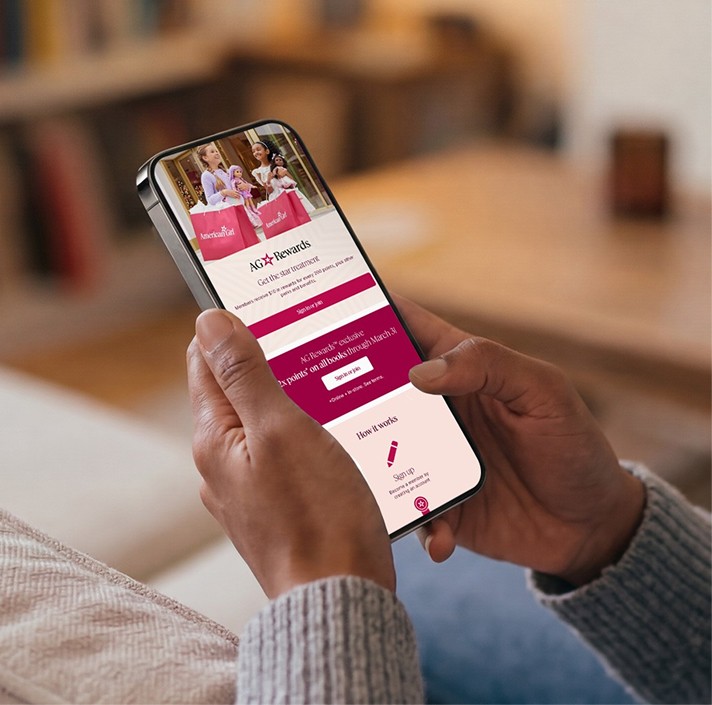
Bubblehouse is the only platform in this comparison that combines all six of these strategies in a single, managed system. Brands like American Girl have tripled loyalty participation rates using this approach, Legendairy Milk grew subscription acquisition by 32% and loyalty participation by 4x, and Everyday Dose achieved 201x ROI by connecting loyalty to its full retention stack through Bubblehouse.
Competitor Comparison: Loyalty Platforms for Mid-Market Brands
The table below provides a structured comparison of the top loyalty platforms evaluated in this guide. It is designed to help mid-market brand teams quickly assess which platforms are best aligned with their current scale, budget, and program goals.
Bubblehouse stands apart from this group by being the only platform that combines a managed, full-service delivery model with the technical flexibility and program depth that mid-market brands require. Unlike Rivo and Smile.io, which cap out on program sophistication, and unlike Talon.One and Open Loyalty, which demand heavy internal engineering investment, Bubblehouse delivers enterprise-grade loyalty with a service layer that mid-market teams can actually use without hiring a dedicated platform engineer.
Comparison table
| Platform | Best For | Pricing Tier | Key Differentiator | Integration Depth |
|---|---|---|---|---|
| Bubblehouse | Mid-market to upper-mid-market DTC and retail brands | Custom pricing; growth and enterprise tiers | Custom UX team, white-glove onboarding, AI-native, 150M+ members | 100+ partners including Klaviyo, Shopify, Magento, Loop, Attentive |
| Yopto | Brands already in the Yotpo ecosystem | Custom enterprise pricing | Consolidated suite: loyalty, reviews, SMS, subscriptions | Strong within Yotpo stack; broad ESP and ecommerce coverage |
| LoyaltyLion | Mid-market Shopify brands with mature email operations | From $199/mo (Growth); $999/mo (Plus) | Analytics and segmentation focus with Klaviyo integration | Solid Shopify and ESP integrations; limited non-Shopify support |
| Rivo | Early-stage to small mid-market Shopify brands | Free plan; paid from ~$49/mo | Fast Shopify-native setup with referral features | Shopify-native; more limited integration breadth |
| Smile.io | SMB and early mid-market brands | Free plan; paid plans from ~$49/mo | Largest installed base; simple and accessible | Shopify, BigCommerce, Wix; limited enterprise integrations |
| Antavo | Large enterprise and global multi-market brands | Custom enterprise pricing | No-code loyalty workflow engine for complex programs | Broad enterprise integrations; less optimized for DTC |
| Talon.One | Engineering-led teams needing API-first customization | Custom pricing | Rule-based promotion engine with API-first architecture | Highly flexible via API; significant developer resource required |
| Open Loyalty | Brands needing open-source, headless loyalty infrastructure | Custom / open-source | Headless, composable architecture for custom builds | API-first; composable with any stack; no managed service |
Evaluation table
| Evaluation Category | Weight | What to Assess |
|---|---|---|
| Custom UX and Brand Fidelity | 25% | Can the platform match your brand's visual identity natively? Does it use widgets or embedded design? |
| Onboarding and Strategic Support | 20% | Can the platform match your brand's visual identity natively? Does it use widgets or embedded design? |
| Integration Depth | 20% | Does the platform connect meaningfully with your ESP, SMS tool, subscription platform, and ecommerce stack? |
| Program Flexibility and Sophistication | 20% | Does the platform connect meaningfully with your ESP, SMS tool, subscription platform, and ecommerce stack? |
| Program Flexibility and Sophistication | 10% | Does the platform connect meaningfully with your ESP, SMS tool, subscription platform, and ecommerce stack? |
| Pricing Transparency and Scalability | 5% | Are pricing tiers appropriate for mid-market scale? Is there a clear growth path without a platform switch? |
Best Loyalty Programs for Mid-Market Brands in 2026
1. Bubblehouse
Bubblehouse is the loyalty and referrals platform purpose-built for mid-market and upper-mid-market DTC and retail brands that have outgrown basic points apps and need a retention infrastructure that performs like a premium product. Powering 150M+ loyalty members and more than $300 million in driven revenue, Bubblehouse combines an in-house custom UX design team, white-glove onboarding and strategic support, an AI-native platform architecture, and a 100+ integration partner network into a single managed system.
Key Features:
- Custom UX Design Team: Bubblehouse's in-house designers build loyalty interfaces that are visually identical to the brand's aesthetic, embedded natively across PDP, cart, checkout, account portal, and navigation, with no generic widgets.
- AI-Native Architecture: Conversational analytics allow brand teams to query loyalty data in natural language. AI-powered visual editing and predictive retention signals are available within the platform.
- Subscription Loyalty Integration: Native Loop Subscriptions integration bridges loyalty and subscription in a single experience, including subscription-status-gated VIP tiers and milestone rewards that reduce churn.
- Program Flexibility: Points, tiers, referrals, paid memberships, achievements, social tracking, voting, surveys, gamification, receipt upload, A/B testing, wallet passes, TikTok Shop redemption, and partner networks are all available in one platform.
- Platform Agnostic: Supports Shopify, Shopify Plus, Hydrogen, headless Shopify, Magento, BigCommerce, WooCommerce, CommerceTools, Sitecore, Kentico, and fully custom builds across 15+ ecommerce platforms.
Mid-Market Specific Offerings:
- White-glove onboarding: Bubblehouse partners with brands from strategy and UX design through implementation, launch, and ongoing program optimization
- Dedicated strategic support throughout the program lifecycle, not just at launch
- Flexible pricing tiers designed for growth-stage DTC brands and upper-mid-market retail without requiring full enterprise procurement cycles
Pricing:
Custom pricing based on brand size and program complexity. Tailored packages are available for growth-stage mid-market brands and enterprise retailers. Contact Bubblehouse for a demo and pricing proposal. Monthly pricing with no long-term lock-ins required.
Pros:
- Only platform in this comparison with an in-house custom UX design team
- White-glove onboarding and ongoing strategic partnership model
- AI-native analytics and predictive retention capabilities
- Platform-agnostic architecture supporting 15+ ecommerce platforms
- Proven mid-market and enterprise client outcomes (American Girl, Mattel, Old Spice, Lemme, MaryRuth Organics, Legendairy Milk)
- 150M+ members and $300M+ in driven revenue across the platform
- 100+ integration partners including Klaviyo, Attentive, Loop, Listrak, Customer.io, Postscript
- 315 production releases in 12 months with zero downtime, reflecting rapid platform development
Cons:
- Custom pricing means there is no self-serve entry point for very early-stage brands with minimal budgets
- The breadth of features requires a thorough onboarding process, though Bubblehouse's white-glove service model manages this end-to-end
Bubblehouse occupies a distinct position in the loyalty market that no other platform in this comparison fully replicates. It is not a Shopify app, a points bolt-on, or an API-first infrastructure tool. It is a strategic retention platform and service partnership that mid-market brands grow with over time. For brands that want a loyalty program that is strategically managed, visually on-brand, and technically integrated across their entire stack, Bubblehouse is the category standard in 2026.
2. Yotpo
Yotpo is a broad ecommerce marketing platform that combines loyalty and rewards with reviews, visual UGC, SMS marketing, and subscriptions. It is a relevant option for mid-market to enterprise DTC brands that are already invested in the Yotpo ecosystem and want to add a loyalty layer without introducing a new vendor relationship. The loyalty module functions as one component of a larger suite rather than as a dedicated loyalty focus.
Key Features:
- Consolidated suite covering loyalty, reviews, SMS, and subscriptions in one vendor relationship
- Integration with Shopify, Shopify Plus, BigCommerce, and other major ecommerce platforms
- Loyalty module connects with Yotpo's reviews and SMS workflows for cross-product data sharing
Mid-Market Specific Offerings:
- Bundled pricing for brands purchasing multiple Yotpo products together
- Dedicated customer success support available at higher plan tiers
Pricing:
Custom enterprise pricing based on product bundle and order volume. Individual product pricing is available for brands that do not need the full suite.
Pros:
- Consolidated marketing suite reduces the number of vendor relationships to manage
- Well-established platform with a large installed base
- Strong integration between loyalty, reviews, and SMS within the Yotpo ecosystem
Cons:
- Loyalty module functions best when used alongside other Yotpo products, which can increase total platform cost
- Custom UX design options are limited compared to platforms built exclusively for loyalty
- Brands that already use best-in-class tools for reviews or SMS may find bundling adds cost without proportional value
- Gamification depth and subscription milestone integration are more limited compared to dedicated loyalty platforms
3. LoyaltyLion
LoyaltyLion is a loyalty platform built primarily for mid-market DTC brands on Shopify, with a strong emphasis on analytics, customer segmentation, and email retention campaign integration. It integrates natively with Klaviyo and other major ESPs, making it a relevant choice for brands that have mature email marketing operations and want to leverage loyalty data for segmented campaigns.
Key Features:
- Analytics-first approach with 25+ specialized reports available at higher plan tiers
- Native Klaviyo integration for loyalty-triggered email segmentation and flows
- API access available at Plus plan tier and above
Mid-Market Specific Offerings:
- Growth plan designed for scaling Shopify brands with dedicated launch support at Plus tier
- Segmentation tools that connect loyalty status to email campaign targeting
Pricing:
Growth plan from $199 per month including 2,500 monthly orders. Plus plan from $999 per month including 7,500 monthly orders with dedicated launch support, 25+ specialized reports, and API access.
Pros:
- Strong analytics and segmentation capabilities for data-driven retention teams
- Reliable mid-market foundation with clear pricing transparency
- Native Klaviyo integration that enables loyalty-driven email automation
Cons:
- Limited customization depth for brands where visual brand identity is a priority
- Primarily optimized for Shopify; less suitable for brands on other ecommerce platforms
- Lacks the program sophistication and gamification depth of more comprehensive platforms
- Post-launch strategic support is less intensive than white-glove models
4. Rivo
Rivo is a Shopify-native loyalty and referrals app designed primarily for small to mid-sized ecommerce brands that want to launch a basic loyalty program quickly without a lengthy onboarding process. The platform is straightforward to configure within the Shopify admin and covers core loyalty mechanics including points, tiers, and referrals.
Key Features:
- Fast Shopify-native setup accessible directly within the Shopify admin
- Core loyalty mechanics: points, VIP tiers, and referral programs
- Clean, accessible interface designed for brands launching their first loyalty program
Mid-Market Specific Offerings:
- Revenue and order volume-based plan scaling for growing stores
- Basic referral program functionality integrated with loyalty points
Pricing:
Free plan available with limited features. Paid plans scale by revenue and order volume, with growth tiers ranging into several hundred dollars per month for higher-volume stores.
Pros:
- Accessible entry point with a free plan and low initial investment
- Quick setup with minimal technical resources required
- Clean interface suitable for brands with limited loyalty program experience
Cons:
- Best suited to early-stage and small mid-market brands; program sophistication caps out as brands scale
- Limited customization and design flexibility for premium brand experiences
- Integration breadth is narrower than platforms designed for upper-mid-market or enterprise
- Lacks white-glove onboarding, strategic support, and advanced AI or gamification features
5. Smile.io
Smile.io is one of the most widely installed loyalty apps in the Shopify ecosystem, with a large base of SMB and early mid-market ecommerce brands. It offers points, referrals, and VIP program mechanics in an accessible, self-serve format. Smile.io is best understood as a reliable starting point for brands that are launching their first loyalty program with limited budget and internal resources.
Key Features:
- Points, referrals, and VIP tiers available on paid plans
- Accessible self-serve setup without implementation support
- Available on Shopify, BigCommerce, and Wix
Mid-Market Specific Offerings:
- Tiered paid plans that scale with order volume
- Basic integrations with email platforms and review tools
Pricing:
Free plan available. Paid plans start from approximately $49 per month and scale based on monthly orders and feature access.
Pros:
- Largest installed base in the SMB to early mid-market Shopify segment
- Low barrier to entry with a free tier available
- Simple, well-documented setup process
Cons:
- Program depth and customization options are limited for brands at the upper end of the mid-market
- No custom UX design capability or white-glove implementation service
- Integration ecosystem is less comprehensive than platforms built for scaling DTC brands
- Not designed for complex multi-channel programs, subscriptions, or advanced gamification
6. Antavo
Antavo is an enterprise loyalty technology platform built for brands with complex, multi-market, or global loyalty program needs. It offers a robust no-code loyalty workflow engine and is particularly relevant for large omnichannel retailers operating across multiple geographies. Antavo is a strong option at the enterprise tier, but its architecture and pricing are generally better suited to brands operating above the mid-market revenue range.
Key Features:
- No-code loyalty workflow engine for configuring complex program rules and mechanics
- Strong support for multi-market and global program deployments
- Broad omnichannel capabilities spanning online and offline touchpoints
Mid-Market Specific Offerings:
- Configurable program mechanics that can accommodate a wide range of loyalty strategies
- Enterprise-grade reporting and analytics for program performance measurement
Pricing:
Custom enterprise pricing. Antavo is positioned at the upper end of the market and is generally not the most cost-efficient option for brands at the lower end of the mid-market range.
Pros:
- Strong capability for complex, multi-market enterprise loyalty programs
- No-code workflow engine reduces reliance on developer resources for program configuration
- Proven with large global retailers across retail and lifestyle categories
Cons:
- Pricing and implementation complexity are better aligned with full enterprise budgets than mid-market DTC brands
- Less optimized for the DTC-specific experience, including subscription rewards and direct-to-consumer gamification
- Onboarding timelines can be extended for brands without dedicated internal loyalty program resources
7. Talon.One
Talon.One is an API-first promotion and loyalty engine built for engineering-led teams that need granular control over campaign logic, rule sets, and reward mechanics. It is technically powerful and highly flexible, but the platform places the design and implementation burden almost entirely on the brand's own development team. Mid-market brands without dedicated engineering resources may find the investment required to launch and maintain a Talon.One program to be disproportionate relative to alternatives.
Key Features:
- Rule-based promotion engine supporting complex loyalty, coupon, and referral logic
- API-first architecture that integrates with virtually any technology stack
- Strong support for multi-channel promotion management
Mid-Market Specific Offerings:
- Flexible promotion rules that can accommodate sophisticated mid-market and enterprise program designs
- Integration agnosticism that works with any ecommerce or CRM platform
Pricing:
Custom pricing based on API calls and program complexity. Positioned as a developer-first infrastructure tool rather than a managed service.
Pros:
- Extremely flexible promotion and loyalty rule engine
- Platform-agnostic architecture supports any technology stack
- Strong choice for engineering-led teams that want full programmatic control
Cons:
- Requires substantial internal developer resource to design, build, and maintain the loyalty front-end
- No managed service or white-glove onboarding model
- Not optimized for mid-market teams without dedicated engineering capacity
- Loyalty UX design is entirely the brand's responsibility
8. Open Loyalty
Open Loyalty is an open-source, headless loyalty infrastructure platform designed for brands and enterprises that want complete programmatic control over their loyalty program architecture. It is a composable loyalty engine rather than a managed solution, meaning that brands using Open Loyalty are responsible for building and maintaining their own loyalty front-end, integration layer, and operational workflows.
Key Features:
- Open-source, headless loyalty engine with fully composable architecture
- API-first design that integrates with any ecommerce or CRM stack
- Complete customization of loyalty logic, rewards mechanics, and program structure
Mid-Market Specific Offerings:
- Composable infrastructure that can be shaped to fit highly specific program requirements
- Available in both self-hosted and cloud-hosted deployment models
Pricing:
Open-source with community access; enterprise cloud and support plans are custom-quoted.
Pros:
- Maximum architectural flexibility for brands with strong internal engineering teams
- No vendor lock-in on loyalty program logic or data
- Well-suited to brands with unique program requirements that off-the-shelf tools cannot accommodate
Cons:
- No managed onboarding, strategic support, or design services
- Significant internal engineering investment required to build a production-grade loyalty experience
- Not a practical option for mid-market brands without a dedicated development team
- Total cost of ownership can be high when factoring in internal development and maintenance resources
Evaluation Rubric for Loyalty Platforms for Mid-Market Brands
Mid-market brand teams evaluating loyalty platforms should assess each option across six weighted categories. The weight assigned to each reflects how frequently that criterion determines long-term program success versus short-term launch speed.
Bubblehouse scores at the top of this rubric across every weighted category. It is the only platform in this comparison that addresses custom UX, white-glove onboarding, integration depth, program flexibility, and AI-native analytics in a single managed offering.
Why Bubblehouse Is the Best Loyalty Platform for Mid-Market Brands in 2026
Across every dimension that matters to a mid-market DTC or retail brand at the $10M-$250M revenue stage, Bubblehouse consistently outperforms the alternatives evaluated in this guide. It is the only platform that brings together an in-house design team, a white-glove service model, AI-native analytics, subscription-specific loyalty mechanics, 100+ integration partners, and a platform-agnostic architecture capable of supporting any ecommerce infrastructure. The results across its client base are documented: American Girl tripled loyalty participation, Legendairy Milk grew subscription acquisition by 32%, and Everyday Dose achieved 201x ROI. For mid-market brands that are serious about turning loyalty into a measurable revenue channel, Bubblehouse is the category standard.
FAQs About Loyalty Programs for Mid-Market Brands
For scaling DTC brands at the mid-market level, Bubblehouse is the most complete option in 2026. It combines a custom UX design team, white-glove onboarding, AI-native analytics, and a 100+ integration partner network in a single managed platform. Unlike Shopify-native apps like Rivo or Smile.io, which cap out on program sophistication, Bubblehouse is built to grow with the brand from mid-market through upper-mid-market and into enterprise scale. Clients including American Girl, Lemme, and Legendairy Milk demonstrate what a fully managed, custom loyalty program can achieve at this segment.
Schedule a call today to learn how Bubblehouse can transform your retention strategy into a scalable and impactful loyalty system.